

WASHINGTON, United States
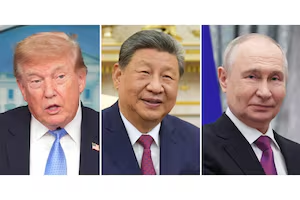
United States President Donald Trump, Chinese President Xi Jinping and Russian President Vladimir Putin are preparing for an unprecedented three-way summit in China next week, in a diplomatic gathering that could shape discussions on nuclear weapons, international security and major global conflicts. The meeting is scheduled for Thursday, November 19, on the sidelines of the Asia-Pacific Economic Cooperation (APEC) summit in Shenzhen, southern China. The White House confirmed the plans on Friday, while the Kremlin acknowledged preparations on Saturday, marking what would be the first joint meeting between the three leaders.
White House spokeswoman Olivia Wales said Trump intends to prioritise discussions about reducing global nuclear arsenals and addressing the ongoing war involving Iran. The proposed talks come nine months after the New Strategic Arms Reduction Treaty, commonly known as New START, expired in February 2026, ending the last remaining nuclear arms control agreement between Washington and Moscow. Trump has called for a new agreement that would include China alongside the United States and Russia.
However, Beijing has previously resisted proposals for trilateral nuclear restrictions, arguing that its arsenal remains significantly smaller than those maintained by Washington and Moscow. Senior American officials have cautioned that no immediate nuclear agreement is expected, describing the meeting as an opportunity to begin discussions rather than conclude negotiations. Despite Russia’s continuing war in Ukraine, US officials indicated that the conflict was not expected to feature prominently in the trilateral discussions.
Washington maintains that separate diplomatic channels are being used to pursue negotiations involving Moscow and Kyiv. The exclusion of Ukraine from the proposed agenda has nevertheless raised concerns among European governments and Ukrainian officials. President Volodymyr Zelenskyy has previously warned against negotiations that could determine Ukraine’s future without its participation. Kremlin spokesman Dmitry Peskov described the planned gathering as highly significant but rejected comparisons with the 1945 Yalta Conference, when major Allied powers discussed the post-war international order.
The meeting also comes amid complicated relations between Washington and Beijing over trade, technology and regional security. China and Russia have strengthened their economic and strategic cooperation in recent years, while maintaining different positions on several international issues.
Although the meeting has been announced, Reuters reported that final negotiations over its format and agenda were continuing. Diplomatic observers say the gathering could provide an important platform for dialogue among three major nuclear powers, even if immediate agreements remain unlikely. The Shenzhen summit will therefore be closely watched for indications of whether Washington, Beijing and Moscow can establish common ground on arms control and international security.



















