

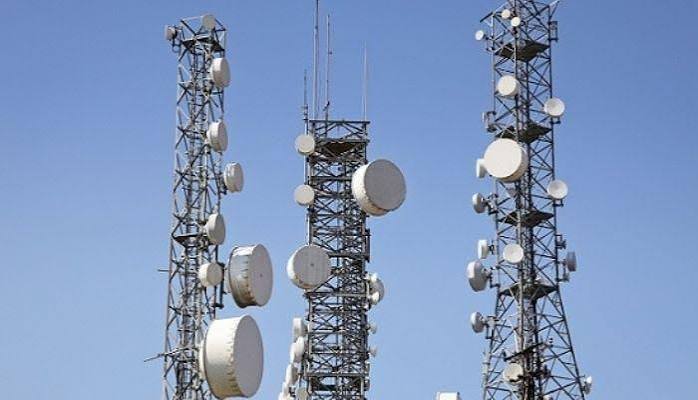
For years, Mrs Sarah Akinya says, the noise and fumes from a telecommunications facility beside her home in Okota, Lagos, have made life uncomfortable. Now, the widow wants Airtel Networks Limited and ATC Nigeria Wireless Infrastructure Limited to pay ₦232 million in damages.
Akinya has taken her complaints to the Lagos State High Court, alleging that the equipment has damaged her property and exposed her household to persistent disturbances.
The case, numbered LD/970/2007, is being heard by Justice Abisoye Jubril Bashua.
In her court filings, the widow is seeking compensation and an order requiring the removal of the installation or an end to the activities she considers harmful.
Her lawyer, Ajibola O. Ajiboye of Fadeson Legal Practice, is representing her in the dispute.
Akinya said she had occupied her four-bedroom bungalow on Alhaji Adeniran Street since December 1995, years before the neighbouring telecommunications facility was established.
According to her account, construction began on the adjoining property in April 2004, eventually leading to the development of LAG 101 Base Station.
She alleged that the facility’s mast, generators and fuel-storage equipment were positioned about four metres from her boundary wall.
The widow claimed that vibrations from the generators had caused cracks in her house and damaged the surrounding fence.
She also complained that exhaust fumes regularly entered her residence, leaving deposits on furniture and floors.
The compensation she is demanding includes ₦200 million for alleged environmental nuisance and ₦32 million for illness, discomfort, inconvenience and suffering.
Akinya also accused the companies of failing to address damage allegedly caused by a trailer delivering a generator to the site.
She claimed that the vehicle struck her boundary fence and that assurances about repairing the damage were not fulfilled.
The fence later collapsed during heavy rainfall, according to her account, leaving the property exposed.
Her complaint also refers to an inspection reportedly conducted by the Lagos State Environmental Protection Agency.
The inspection allegedly recorded noise levels of 71 decibels at her entrance and 61 decibels five metres away.
Those measurements were said to exceed the stated residential limits of 55 decibels during the day and 45 decibels at night.
Following the inspection, the agency reportedly directed the facility’s operators to introduce soundproofing and adjust the direction of exhaust pipes.
The lawsuit subsequently included ATC Nigeria Wireless Infrastructure Limited after the company was identified as the installation’s current operator.
On January 15, 2026, the court granted an application joining ATC as the second defendant.
Akinya’s lawyers later wrote to the company’s management on September 2, 2026, regarding the complaints.
The widow is asking the court to hold the companies responsible for the alleged disturbances and damage.
Whether the claims justify compensation or restrictions on the facility’s operations remains a matter for judicial determination. No finding of liability is established by the allegations alone.



















