

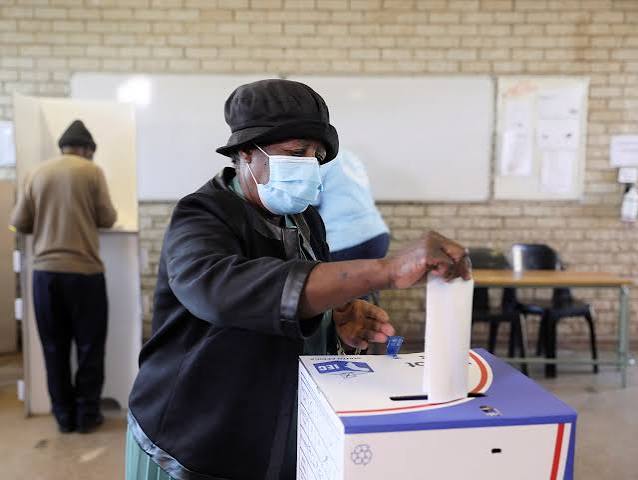
Years of unreliable water supply, electricity disruptions and poor waste collection have become major concerns for South African voters as they cast their ballots in municipal elections on Wednesday, November 4.
The elections will determine who controls local councils responsible for providing basic services and maintaining public infrastructure across the country.
For many residents, the contest is about more than political parties. It is also an opportunity to express dissatisfaction with corruption, unemployment, crime and the declining quality of municipal administration.
Johannesburg has attracted particular attention after years of complaints about water shortages, damaged roads, electricity problems and rubbish left uncollected.
The city’s political instability has also raised concerns, with changes in coalition leadership complicating efforts to address its infrastructure problems.
The Democratic Alliance (DA) has nominated its former leader, Helen Zille, as its mayoral candidate in Johannesburg.
Her party hopes dissatisfaction with municipal services will help it challenge the African National Congress (ANC), which has experienced declining electoral support.
The ANC lost its outright majority of votes in the 2021 local government elections and subsequently surrendered its parliamentary majority during the 2024 national polls.
Pre-election surveys have suggested that the party could face another difficult contest, although the final results will determine the extent of any losses.
Attention is also focused on Tshwane, which includes Pretoria, and eThekwini, the metropolitan municipality covering Durban.
In KwaZulu-Natal, former President Jacob Zuma’s uMkhonto weSizwe (MK) party is expected to compete strongly against established political parties.
The DA, meanwhile, remains the leading political force in Cape Town and is widely expected to retain control of the city.
Away from the political campaigns, the condition of local government finances remains a serious concern.
Several municipalities are struggling with outstanding debts, weak revenue collection and insufficient resources to maintain essential infrastructure.
Financial assessments show that only 15 per cent of municipalities achieved clean audits for the 2024–2025 financial year.
The figures have raised further questions about accountability and how effectively public funds are managed at local government level.
Coalition disagreements have created additional difficulties in some major cities, where changes in political leadership have disrupted municipal administration.
To encourage participation, President Cyril Ramaphosa declared November 4 a public holiday.
The Electoral Commission arranged thousands of polling stations nationwide, while special voting took place on November 2 and 3.
Voting was scheduled to end at 9 p.m., with official results expected in the days following the election.
Although the contest will determine which parties control local councils, residents will ultimately judge the winners by their ability to restore dependable services and improve conditions in their communities.



















