

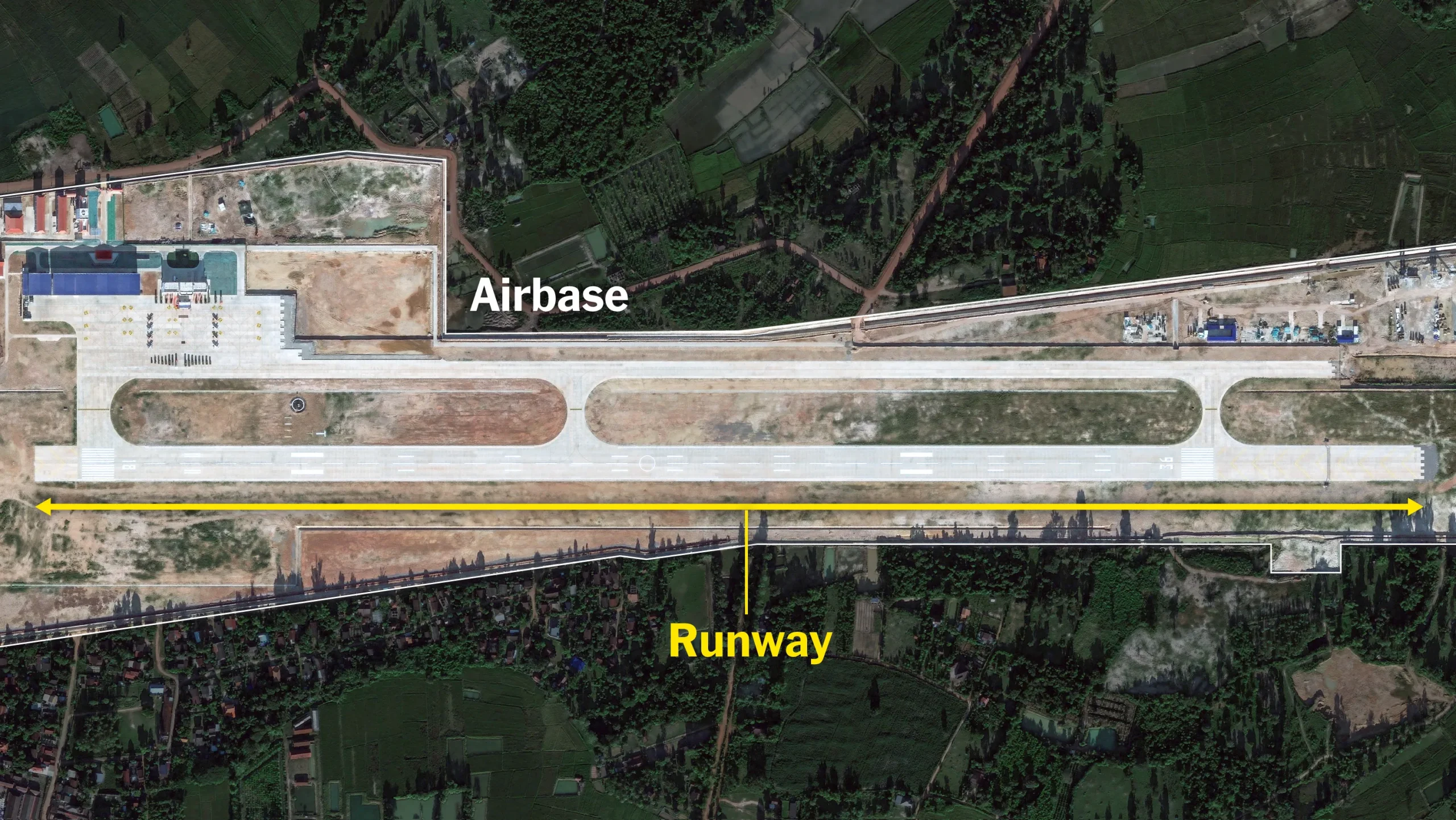
A new military training centre in Laos is drawing attention beyond the country’s borders, after satellite images revealed Chinese-made aircraft at the facility. The development gives Beijing a new defence foothold in mainland Southeast Asia, although its long-term military role remains unclear.
The China-Laos Joint Support and Training Center and the China-Laos Friendship Aviation Academy began operating on September 29 at Ban Keun Airport in Vientiane Province, around 50 kilometres north of the Lao capital. China says the project is designed to strengthen training for Lao air force pilots.
The facility is presented as a joint undertaking, with China and Laos expected to maintain and operate it together. Chinese authorities have said the arrangement is not aimed at any third country, describing it as a product of cooperation between the two governments.
But images captured by commercial satellite provider Vantor on September 30 showed eight K-8 aircraft, also known as Hongdu JL-8s, at the airport, alongside more than two dozen support vehicles. The aircraft were visible on a runway where construction work was still under way.
The site has changed considerably since work began in late 2025. Satellite imagery shows a paved runway, taxiways, aircraft parking areas and several buildings built on land that was previously largely undeveloped. The scale of the project has raised questions about whether its capabilities could expand further.
The K-8 is a two-seat aircraft used for pilot training and light-attack missions. Both China and Laos operate the type, but the number of aircraft seen at Ban Keun has drawn scrutiny because it exceeds the number Laos is assessed to possess.
Some security analysts believe the centre could become China’s first fully developed military outpost in mainland Southeast Asia. It could provide training and logistical support for personnel operating in the region. However, the presence of aircraft alone does not establish the facility’s full purpose or prove that it will become a permanent Chinese combat base.
China already maintains an overseas military base in Djibouti and has developed a defence relationship with Cambodia around Ream naval base. The Laos facility adds to Beijing’s growing network of military partnerships and access points beyond its borders.
Its location also matters. Laos shares a border with China and has transport links, including the China-Laos Railway. Vietnam, which has longstanding territorial disputes with Beijing in the South China Sea, may view deeper Chinese military access in neighbouring Laos as a strategic concern. Thailand is also watching developments in its neighbour.
Still, the site’s immediate value should not be overstated. Laos is landlocked, and the facility’s eventual significance will depend on how it is used, whether more equipment and personnel arrive, and how far its infrastructure develops. For now, the centre marks a closer military partnership between Beijing and Vientiane, while leaving open questions about China’s future intentions.



















