

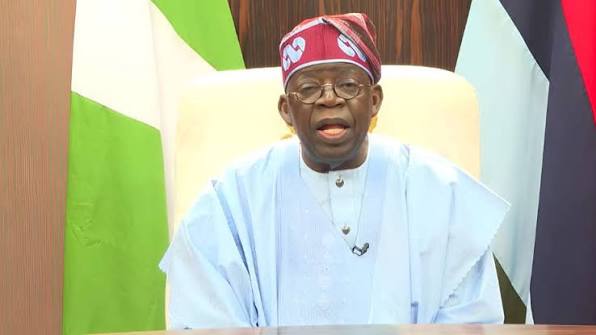
President Bola Tinubu has announced a new focus on reducing the cost of living, saying his administration will concentrate on making it cheaper to produce and transport goods. He made the commitment in his Independence Day address on Thursday as Nigeria marked its 66th anniversary.
Tinubu said the government’s next economic phase would move beyond stabilisation and place greater attention on shared prosperity. He said the objective was to translate economic growth into improvements that Nigerians can feel through affordable food, transportation, education and employment.
Agriculture is central to the plan. The President said his government would expand mechanised irrigation and dry-season farming, improve access to seeds and fertiliser, increase mechanisation and strengthen storage and transportation to support greater agricultural production.
He also pointed to transport infrastructure as part of the effort to bring down prices. According to Tinubu, roads, railways and ports are being built or completed to connect farms and factories with markets and reduce the cost of moving goods around the country.
The President linked production costs directly to what consumers eventually pay. He said lower electricity expenses for manufacturers, reduced losses between farms and markets, faster movement of goods and stronger competition should help bring down market prices.
Tinubu also acknowledged that many households remain under pressure. He said families are still struggling with basic needs such as food, school fees, medical expenses and transportation, adding that government cannot immediately reverse problems that accumulated over several decades.
The administration is also placing employment and industrial activity alongside its cost-cutting plans. Tinubu said Nigeria would use its gas resources to support new industries, help revive factories, expand digital connectivity and provide businesses with infrastructure, finance and skills support.
Social intervention programmes were another part of the President’s response. He said government was strengthening support for poorer households and improving the National Social Register, while the Nigerian Education Loan Fund would help students from low-income families access higher education.
Tinubu also cited consumer credit initiatives as part of the support available to working Nigerians. He said CREDICORP was helping people obtain vehicles, solar systems, digital devices and other essential assets without having to save the entire purchase cost beforehand.
The President’s announcement comes amid continuing concern about petrol prices and household expenses. In September, reports recorded petrol prices reaching N1,470 per litre in some locations, with the increase prompting criticism from opposition figures over its effects on transportation and other daily costs.
Tinubu nevertheless defended the direction of his economic reforms, saying the government had moved beyond what he described as the emergency phase. He cited economic growth, lower inflation from its peak, rebuilt foreign reserves and improved foreign-exchange stability as indicators of progress.
The President said the new phase would require sustained growth and the creation of millions of productive opportunities. While acknowledging that the transition would take time, he said government’s objective was to move from managing poverty towards reducing it through stronger production, employment and wider economic opportunity.



















