

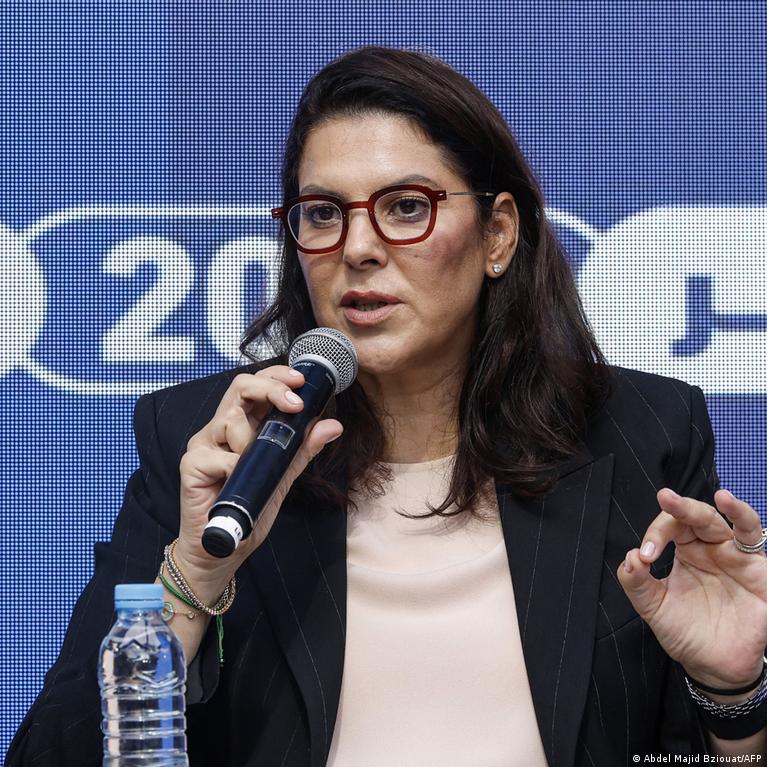
RABAT, Morocco — September 30. 2026
Morocco’s King Mohammed VI has appointed Fatima Ezzahra El Mansouri as the country’s first female prime minister, marking a historic breakthrough for women in Moroccan politics following parliamentary elections in which her Authenticity and Modernity Party emerged with the largest number of seats.
The Royal Palace announced the appointment on Tuesday after the king received El Mansouri in Rabat and formally tasked her with forming a new government.
Under Morocco’s constitution, the king appoints the head of government from the political party that wins the largest number of seats in the House of Representatives.
El Mansouri’s centrist Authenticity and Modernity Party, known as PAM, won 97 of the 395 parliamentary seats in the September 23 election. The National Rally of Independents secured 66 seats, while the Istiqlal Party won 65 and the Justice and Development Party obtained 54.
Because PAM fell well short of the 198 seats needed for a majority, El Mansouri’s immediate challenge will be negotiating a governing coalition. She has said there will be “no red lines” in coalition discussions, signalling openness to agreements with other major parties.
The 50-year-old lawyer previously served as Morocco’s minister responsible for national planning, urban development and housing and has twice led Marrakesh’s municipal government. She first became mayor in 2009, becoming the first woman elected to that position in the city.
Her appointment makes her only the second woman to lead a government in the Arab world, after Tunisia’s Najla Bouden, who served as prime minister from 2021 to 2023.
El Mansouri assumes office amid significant economic and social pressures. Youth unemployment, inflation, the cost of living and regional inequalities featured prominently during the election campaign. She has pledged to focus on younger Moroccans and to restore confidence through employment and economic opportunities rather than political promises alone.
Her government will also oversee billions of dollars in infrastructure investment as Morocco prepares to co-host the 2030 FIFA World Cup with Spain and Portugal.
Despite the significance of the premiership, Morocco remains a constitutional monarchy in which King Mohammed VI retains substantial authority over defence, foreign policy and other strategic areas.
El Mansouri must now assemble a coalition and submit her proposed government for royal approval, making coalition negotiations the first major test of Morocco’s new political era.



















