

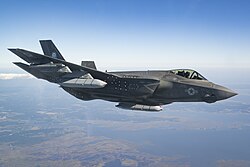
FORT WORTH, Texas — Germany has received its first F-35A Lightning II fighter jet from the United States, marking a major step in Berlin’s military modernisation drive as NATO allies increase defence spending in response to growing security threats.
Lockheed Martin presented the aircraft to the German government on September 18, 2026, during a ceremony at its F-35 production facility in Fort Worth, Texas. The company said the delivery would strengthen allied interoperability and readiness across NATO.
The aircraft is the first of 35 F-35A jets Germany ordered to replace its ageing Tornado fleet. Berlin selected the F-35 after Russia’s full-scale invasion of Ukraine, partly because the aircraft is certified for NATO’s nuclear-sharing mission, a role currently carried out by German Tornado aircraft.
Germany’s first F-35A, known as MG-01, entered final assembly earlier this year before moving through engine installation, finishing and delivery stages. Lockheed said German aircraft began major assembly in December 2024, with the first eight jets taking shape at the company’s facilities in the United States.
The first German F-35s will initially remain in the United States for pilot and maintenance training. Defence industry reports say the early aircraft are expected to support training at Ebbing Air National Guard Base in Fort Smith, Arkansas, before Germany receives aircraft at Büchel Air Base later in the decade.
The delivery comes as NATO members move to sharply increase defence investment. At the 2025 NATO summit in The Hague, allies agreed to invest 5 percent of GDP annually on defence and defence-related spending by 2035, including at least 3.5 percent for core military requirements and up to 1.5 percent for security-related investments such as infrastructure, resilience, innovation and defence industry.
NATO says the spending increase is intended to strengthen deterrence, improve readiness and help allies meet new capability targets in areas such as air defence, logistics, long-range strike, drones and industrial production.
For Germany, the F-35 purchase is one part of a broader effort to rebuild military readiness after years of underinvestment. Chancellor Friedrich Merz’s government has pledged to accelerate defence spending, while NATO Secretary General Mark Rutte has praised Germany’s plan to reach the alliance’s core defence target earlier than the 2035 deadline.
The F-35 is expected to give the Luftwaffe advanced stealth, sensor and data-sharing capabilities, allowing German pilots to operate more closely with allies that already fly the aircraft, including the United States, the United Kingdom, Italy, the Netherlands, Norway, Denmark, Poland and Finland.
The handover is both symbolic and strategic. It reflects Germany’s shift toward a more assertive defence posture and NATO’s wider effort to prepare for a more dangerous security environment shaped by Russia’s war in Ukraine, hybrid threats and pressure for Europe to carry more of the alliance’s military burden.



















