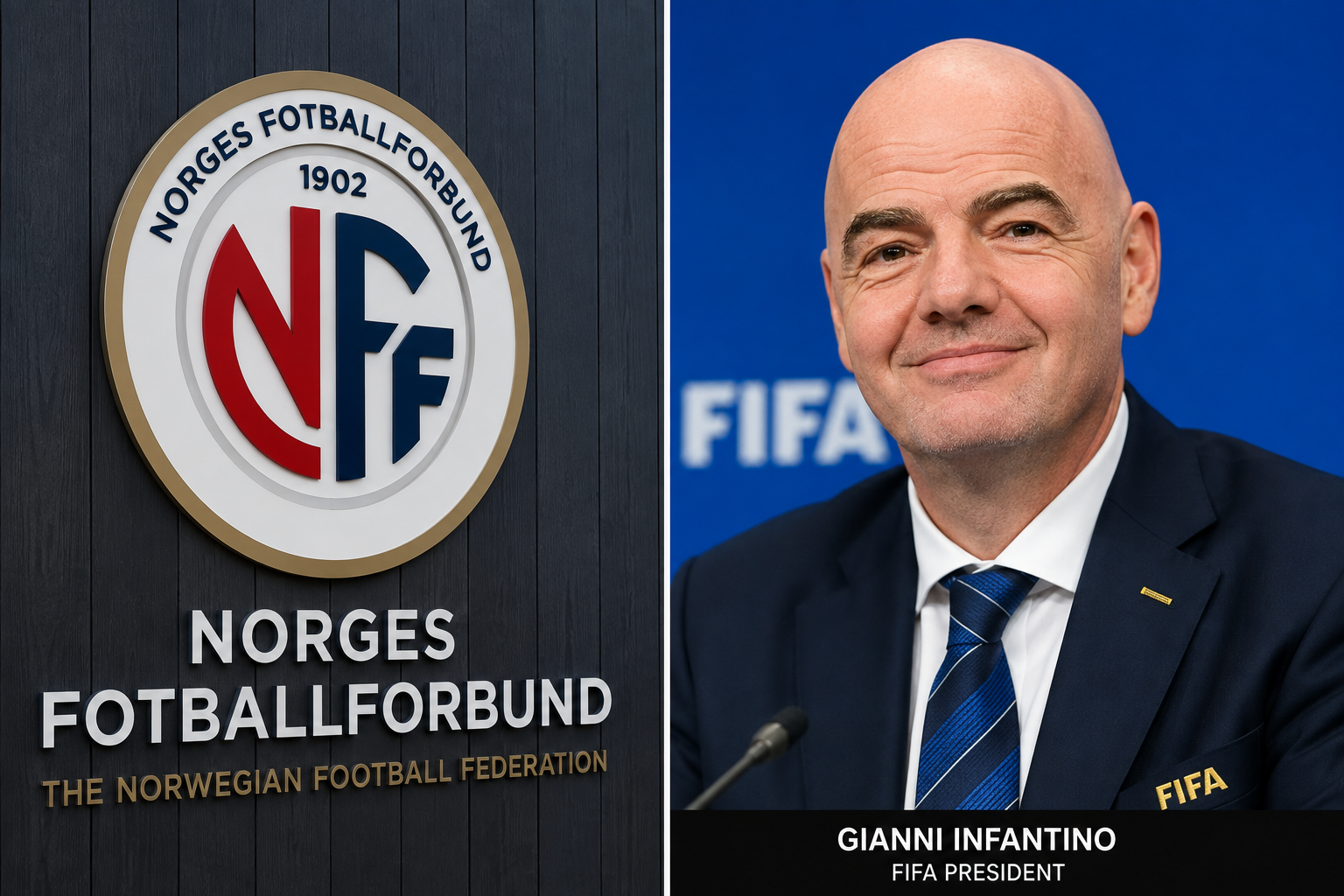
The Norwegian Football Federation (NFF) has taken a stronger stance against FIFA president Gianni Infantino, declaring that it no longer has confidence in his leadership and calling for him to leave the organisation’s top position.
The federation’s president, Lise Klaveness, disclosed the decision after an NFF board meeting in Norway. She said the federation would communicate its position to FIFA and engage with other national associations that share its concerns about the direction of international football’s governing body.
Klaveness said the relationship between the Norwegian federation and FIFA leadership had reached a point where confidence could no longer be maintained.
“There is no trust now.”
The latest dispute centres partly on FIFA’s handling of a proposed commercial venture involving outside investment in World Cup-related rights. The initiative, associated with FIFA Forward Enterprise, attracted opposition from football organisations and was subsequently abandoned.
For Norway, the episode raised questions about the way major decisions are developed and communicated within FIFA. The federation believes national associations and other stakeholders should have greater involvement when decisions could affect the structure and commercial future of world football.
Norway’s criticism of Infantino has not emerged suddenly. The federation has previously challenged decisions made under his presidency, including FIFA’s controversial decision earlier this year to give its Peace Prize to U.S. President Donald Trump.
Norwegian officials argued that the award risked undermining football’s claim to political neutrality and questioned whether such initiatives were appropriate for FIFA.
The NFF has also expressed concerns over the handling of a disciplinary matter involving Folarin Balogun, after a World Cup-related sanction against the United States forward was suspended following intervention from Trump. The Norwegian federation considered whether the episode warranted an ethics complaint.
These disputes have contributed to a wider argument in Norway that FIFA needs stronger institutional safeguards and greater transparency. Klaveness has repeatedly advocated reforms aimed at making football’s governing structures more accountable.
The timing of Norway’s announcement is particularly significant because FIFA is preparing for its next presidential election in March 2027. Infantino, who first became FIFA president in 2016, is expected to seek another term.
Norway’s demand does not by itself threaten Infantino’s position. FIFA’s presidency is determined through the organisation’s electoral process, meaning any challenge would require broader support among member associations.
The NFF’s position nevertheless adds to criticism coming from parts of European football. Several officials and organisations have raised concerns about FIFA’s leadership style, decision-making process and relationship with football’s regional governing bodies.
Infantino remains FIFA president and has continued to defend the organisation’s policies. FIFA has also rejected criticism surrounding some of the issues cited by its Norwegian critics.
For Norway, however, the immediate priority is greater accountability. The federation intends to work with other associations to press for changes to FIFA’s governance and decision-making structures.
The call for Infantino’s resignation therefore represents more than a disagreement over individual policies. It is a direct challenge to the leadership of world football’s governing body and could become an important issue as FIFA approaches its 2027 presidential contest.