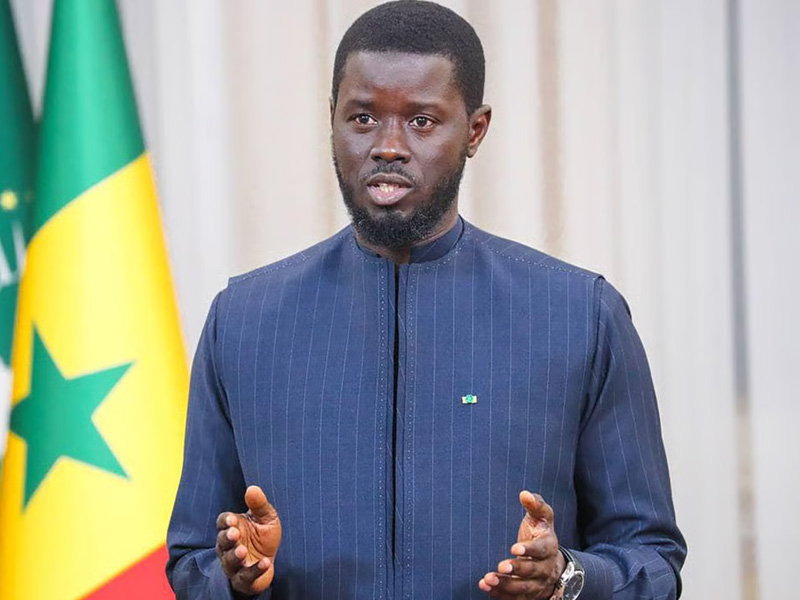
Three social-media personalities in Senegal have been handed prison sentences over online material considered offensive to President Bassirou Diomaye Faye, bringing renewed attention to the country’s handling of political criticism on digital platforms.
The case centres on content circulated on TikTok and has attracted interest because it emerged during a growing political disagreement between Faye and Ousmane Sonko, the former prime minister and a key figure in the ruling PASTEF movement.
The defendants were connected to an online platform associated with supporters of Sonko. Authorities became interested in their activities after a video recorded during the Magal of Mbacké Bari was circulated on social media.
Investigators from Senegal’s Special Cybersecurity Division subsequently traced and arrested the individuals. They were questioned before being placed in custody as prosecutors pursued allegations relating to remarks directed at the head of state.
The prosecution and subsequent convictions have raised wider questions about the boundaries of political commentary online. Senegal has traditionally been regarded as one of West Africa’s more stable democracies, but recent cases involving social-media posts have prompted concern among press-freedom and civil-liberties organisations.
The latest case is not isolated. Earlier in 2026, journalist Daouda Ndiaye, popularly known as Daouda Wally, was imprisoned after reposting on Facebook a caricature of President Faye. The journalist, who works with Feeling Dakar TV, received a two-month custodial sentence and a fine.
That earlier prosecution intensified discussion about whether satire and criticism of political leaders should attract criminal penalties, particularly when material is distributed through social-media networks.
The latest arrests also come against the backdrop of an increasingly visible political split between Faye and Sonko. The two men were central to PASTEF’s rise to power in 2024, but their political partnership has since deteriorated.
Faye removed Sonko as prime minister in May 2026, after which Sonko became president of the National Assembly. Faye has subsequently moved to establish his own political organisation, while Sonko remains a major force within PASTEF.
The disagreement between the two political figures has added tension to Senegal’s political environment. Their rivalry is expected to remain significant as the country approaches future electoral contests, including the 2027 local elections and the next presidential race.
Against that background, the imprisonment of the three TikTok creators has significance beyond their individual cases. It illustrates the increasingly important role social media plays in Senegal’s political debate and the risks faced by users whose online comments are viewed by authorities as crossing legal boundaries.
The cases have consequently revived a fundamental question for Senegal: how should the state protect public officials from unlawful abuse while preserving citizens’ ability to criticise those in power?
For the convicted influencers, that debate now has immediate consequences, with their social-media activity resulting in custodial sentences. For rights advocates, the cases are another test of Senegal’s commitment to freedom of expression during a period of political change.