

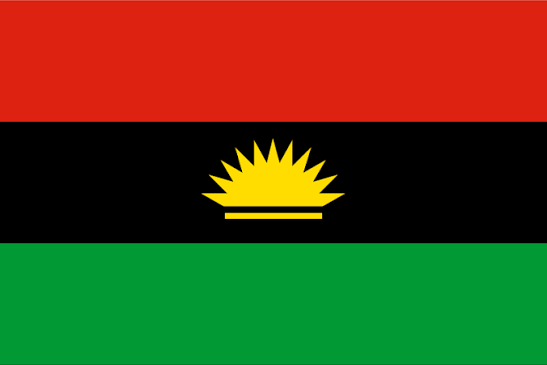
The Biafra Independence Movement (BIM)-Movement for the Actualisation of the Sovereign State of Biafra (MASSOB) has renewed its campaign for the peaceful dissolution of Nigeria, insisting that the country’s current political arrangement has failed to foster lasting unity or national progress.
The position was contained in a statement released in Okwe, Onuimo Local Government Area of Imo State, where the group argued that the over 100-year-old union established by the British had become unsustainable.
The movement’s founder, Ralph Uwazuruike, said the challenges confronting the country—including insecurity, political instability, economic hardship and growing ethnic mistrust—are signs that the existing federal structure has not fulfilled its purpose.
He maintained that repeated efforts by successive governments to address these problems have produced little lasting impact because the foundation of the Nigerian state remains fundamentally flawed.
“The 1914 amalgamation has failed and cannot continue to serve as the foundation for peaceful coexistence.”
Rather than seeking another round of constitutional amendments or political restructuring, Uwazuruike said the country should adopt a model that gives every region the opportunity to govern itself. He argued that self-determination would allow each area to pursue development according to its own priorities while reducing the recurring disputes associated with the concentration of power at the centre.
As part of its proposal, BIM-MASSOB called for the emergence of six independent republics reflecting Nigeria’s present geopolitical configuration. The proposed entities are Biafra, Oduduwa, Niger Delta, North-Central, North-East and North-West. The organisation expressed confidence that each of the regions has the human resources, economic potential and natural endowments needed to function as a sovereign nation.
“Every geopolitical zone has the capacity to survive and prosper as an independent republic.”
The separatist group argued that many of the country’s long-running political disagreements stem from attempts to preserve a single national structure despite deep historical, cultural and regional differences.
It said debates over restructuring, resource allocation and constitutional reforms have continued for decades without resolving the underlying issues responsible for agitation in various parts of the federation.
BIM-MASSOB also urged the United Nations, the African Union and other international organisations to encourage peaceful dialogue on the future of Nigeria. The group maintained that its demand is rooted in the principle of self-determination and not violence, adding that any lasting political settlement should emerge through democratic engagement and respect for the wishes of the country’s diverse peoples rather than through coercion.



















