

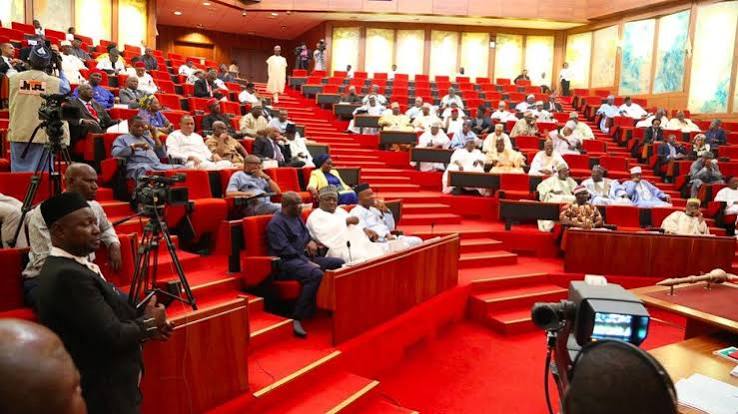
The Nigerian Senate has moved to end confusion surrounding the Federal Road Safety Commission (FRSC) Amendment Bill, saying the legislation does not introduce a fresh ban on street preaching. The clarification followed public reactions to provisions dealing with preaching and hawking inside commercial vehicles.
In a statement issued in Abuja by the Directorate of Media and Public Affairs in the Office of the Senate Leader, the upper chamber said the restrictions have existed in Nigerian law for years. It cited Section 10(4) of the FRSC Establishment Act, 2007, and Regulation 220 of the National Road Traffic Regulations, 2012, as the legal basis for the existing provisions.
The Senate explained that the amendment process merely changes the numbering of the relevant provision. What was previously listed as Item 36 in the Second Schedule of the 2007 Act has been moved to Item 49 under the proposed amendment, rather than creating an entirely new offence.
The clarification was particularly aimed at separating the restriction from wider claims that religious preaching in public spaces would be prohibited. The Senate said the provision specifically concerns activities carried out inside commercial vehicles, with the stated objective of protecting passengers and improving road safety.
“The Bill does not outlaw preaching on the streets as some interests have claimed.”
The controversy emerged after reports on the amendment highlighted a proposed ₦50,000 penalty for people convicted of preaching, hawking or trading inside commercial vehicles. Earlier reports on the bill said it forms part of a wider effort to strengthen enforcement and increase penalties for several road traffic offences.
The Senate also rejected suggestions that Senate Leader Opeyemi Bamidele personally initiated the disputed provision. It said the legislation originated in the House of Representatives and reached the Senate as a concurrence bill requiring consideration by the upper chamber.
The Senate stressed that the legislative process remains open and urged stakeholders with concerns about the bill to use appropriate channels to present their views before the process is concluded.



















