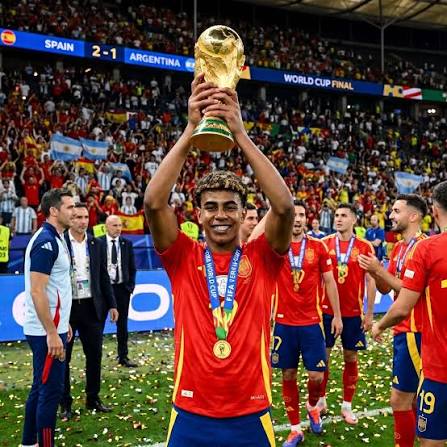
Spain were crowned 2026 FIFA World Cup champions after Ferran Torres scored the decisive goal in extra time to secure a 1-0 victory over defending champions Argentina in the final at New York New Jersey Stadium, East Rutherford, New Jersey.
The victory earned Spain a second World Cup title, 16 years after their maiden triumph in South Africa, and completed an impressive tournament campaign.
After a goalless 90 minutes, the contest was settled in the 106th minute when Torres, who had come off the bench, converted from close range after Argentina failed to clear their lines. Spain controlled much of the game, creating the better opportunities, while Argentina struggled to threaten the Spanish defence for most of the encounter.
Argentina’s task became even more difficult after Enzo Fernández was sent off in stoppage time at the end of normal time following a second yellow card. Despite being reduced to 10 men, Lionel Scaloni’s side defended resolutely in extra time but eventually conceded as Spain’s persistent attacking pressure finally paid off.
Speaking after the final in East Rutherford, Spain’s match-winner Ferran Torres dedicated the victory to the entire nation, saying the success belonged to every Spaniard rather than the players alone.
“This goal belongs to 47 million people, not just me or the 26 players.”
“We believed until the end, and today our dream became reality.”
Spain head coach Luis de la Fuente praised his players for their discipline and determination, describing the triumph as the reward for years of hard work and commitment. He said the team’s unity and consistency throughout the tournament were key factors behind their success.
Meanwhile, the defeat marked a disappointing end to Argentina’s attempt to defend the title won in Qatar in 2022. The final is also expected to be remembered as Lionel Messi’s last appearance at a FIFA World Cup.
Although the South American champions fell short of retaining the trophy, their run to the final reinforced their status among the world’s leading football nations.
Spain concluded the expanded 48-team tournament unbeaten, adding the world title to their recent European Championship success and reinforcing their position as one of international football’s dominant teams. Their victory also capped a World Cup that introduced several historic innovations, including a halftime show and championship rings for the winners.