
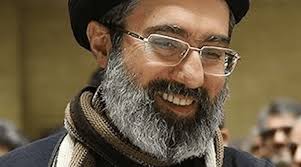
Mojtaba Khamenei, the son of Iran’s late Supreme Leader Ayatollah Ali Khamenei, has emerged as one of the leading contenders to succeed his father, as Iran’s clerical establishment moves to fill the country’s most powerful office after the U.S.-Israeli strikes that killed the 86-year-old leader. Reuters reported on Wednesday that two Iranian sources described Mojtaba, 56, as a favoured candidate within the establishment, while the Assembly of Experts was said to be moving toward a decision.
The succession decision formally rests with the 88-member Assembly of Experts, the clerical body empowered to choose the supreme leader. Ahmad Khatami, a member of the assembly, told Iranian state media that members hoped to vote “at the earliest opportunity,” signalling an effort to avoid a prolonged power vacuum as the country confronts war, internal strain and uncertainty over its next leadership structure.
Reuters said other names under discussion include Alireza Arafi, who is part of the interim leadership structure now helping steer the country, and hardline cleric Mohsen Araki. Some reports have also mentioned Hassan Khomeini, grandson of Islamic Republic founder Ayatollah Ruhollah Khomeini, although it remains unclear how much backing he commands within the conservative clerical and security establishment.
If chosen, Mojtaba Khamenei would mark a highly controversial transition. Such an outcome would amount to a quasi-hereditary handover in a system founded on opposition to monarchy. Reuters noted that his father had publicly rejected hereditary succession as an idea in 2024, making Mojtaba’s emergence all the more politically sensitive.
Though he has never held a formal senior state office, Mojtaba has long been viewed as influential behind the scenes. Reuters described him as his father’s gatekeeper with strong ties to the Revolutionary Guards, especially more hardline elements. U.S. Treasury, which sanctioned him in 2019, said he acted on behalf of the supreme leader despite not holding an elected or formally appointed government post.
His record is contentious. Critics have accused him for years of helping shape Iran’s hardline political direction and of playing a role in the suppression of the 2009 protest movement, though such allegations remain politically charged and difficult to verify independently. Bloomberg also reported in January that a year-long investigation found Mojtaba had built an international property empire valued at more than $100 million through a network of companies and investments.
The Assembly of Experts has overseen only one previous leadership transition — the selection of Ali Khamenei in 1989. That history, combined with the current wartime context, means the choice of Iran’s next supreme leader is likely to shape not only the country’s internal balance of power but also the trajectory of the wider regional crisis.