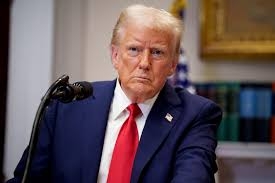
Davos, Switzerland / Washington — US President Donald Trump has signaled that his newly launched “Board of Peace,” initially framed as an oversight mechanism for post-war governance in Gaza, could evolve into a broader forum addressing global disputes—an ambition that is fueling concern among diplomats and analysts that the body may rival, dilute or politically pressure existing UN-led mechanisms.
Speaking at the World Economic Forum in Davos, Trump said dozens of countries had signed onto the initiative and argued it could be scaled beyond Gaza if early efforts “succeed,” while also striking a more conciliatory note that any expanded role would be pursued alongside the United Nations rather than in open competition with it.
The White House has described the Board of Peace as part of a “Comprehensive Plan” for Gaza’s transition, operating alongside a governance framework that includes a Palestinian technocratic committee and an international stabilization component.
However, the initiative’s governance structure has already triggered pushback from a key stakeholder. Israel said it objected to the announced line-up of a subordinate “Gaza executive board,” arguing it was not coordinated with Israeli authorities and “runs contrary” to Israeli policy. Israeli media and international reporting have pointed to objections over the inclusion of Turkish Foreign Minister Hakan Fidan and a Qatari official.
Separate reporting has indicated that Trump has invited a range of leaders to join the wider Board of Peace, with some prospective participants weighing domestic political constraints, including parliamentary approval processes.
The uncertainty around membership and mandate is also feeding skepticism among some of Washington’s traditional partners, with reporting noting questions over how the body will operate, what authority it would hold relative to the UN system, and whether it could become an instrument of geopolitical influence rather than a neutral peace platform.
For now, the Board of Peace’s credibility will likely hinge on near-term outcomes in Gaza—where governance, reconstruction, and security arrangements remain politically contested—and on whether the US can align key regional actors and Israel behind a workable operating model.