

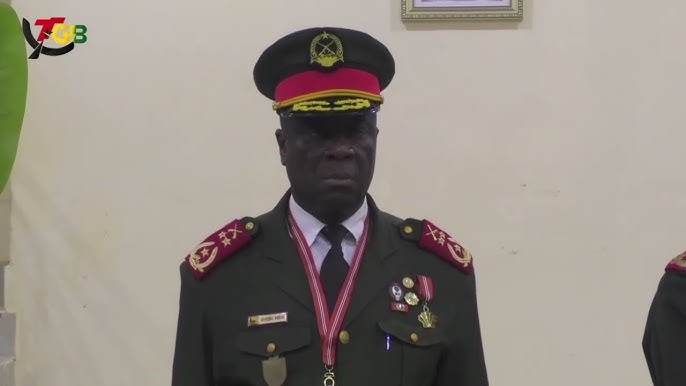
BISSAU — Guinea-Bissau’s military has seized power in yet another coup, installing General Horta Inta-A as transitional president just days after a disputed presidential election and ahead of the official release of results.
Inta-A’s inauguration on Thursday followed a swift power grab in which soldiers toppled the civilian leadership, suspended state institutions and took control of key installations in the capital, Bissau.
In a statement broadcast on state television, the new military ruler claimed the move was necessary to “defend national stability” from unnamed politicians and drug barons, but provided no evidence to back the allegations.
“Created in response to the events of November 26, this new military entity immediately assumed supreme power in the state of Guinea-Bissau,” Inta-A declared at his swearing-in, promising a one-year transition period beginning immediately.
Guinea-Bissau has long been a notorious hub for cocaine trafficking from Latin America to Europe and has a troubled record of military interference in politics since its independence from Portugal in 1974.
The latest coup came amid a tense standoff over last Sunday’s election. Both incumbent President Umaro Sissoco Embaló and opposition candidate Fernando Dias claimed victory before the electoral commission could publish provisional results.
Ahead of the military announcement, Dias accused Embaló of staging a “fake coup” to derail the electoral process because he feared defeat at the polls. The army moved hours later, announcing the dissolution of civilian authorities and declaring Inta-A as head of state.
On Wednesday, Embaló told French media that he had been arrested by soldiers, but his current whereabouts are unknown.
The African Union has condemned the takeover, demanded Embaló’s release and called for a return to constitutional order. Other regional and international partners are expected to weigh in as the situation develops.
In Bissau on Thursday, streets were quieter than usual, with heavily armed soldiers manning checkpoints and many residents choosing to stay indoors. Markets operated in a limited fashion, and public institutions remained under tight guard.
The power shift in Guinea-Bissau is the latest in a wave of coups across West Africa, where fragile democracies have been undermined by disputed elections, rising insecurity and deep public mistrust of political elites.
Analysts warn that the renewed military intervention in Bissau could further embolden armed forces elsewhere in the region, reinforcing a dangerous trend of soldiers stepping in where political institutions are seen to be failing.



















