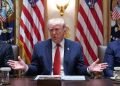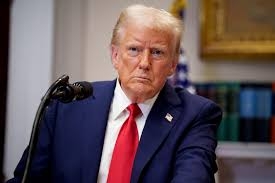
US President Donald Trump has signalled a new focus on the conflict in Sudan, telling participants at the US–Saudi Investment Forum that he now views the crisis as a priority for Riyadh and its regional partners.
Speaking alongside senior Saudi officials and business leaders, Trump said Saudi Crown Prince Mohammed bin Salman had urged him to intervene.
“The crown prince asked me to do something very powerful on Sudan,” Trump said. “I settled eight wars,” he added, describing Sudan as “crazy and out of control,” and declaring that his team would now “start working” on the issue.
Trump admitted Sudan was not initially on his agenda but framed his new interest as part of a broader record of conflict resolution that he has repeatedly promoted on the international stage.
His assertion that he “settled eight wars” has, however, been met with scepticism from analysts and foreign-policy observers.
Experts note that:
- Several of the situations Trump has previously cited as “wars” were partially de-escalated conflicts or frozen disputes, not fully resolved wars.
- In other cases, agreements brokered under his administration remain fragile, with long-term outcomes still uncertain.
- Some of the disputes he counts among his achievements do not clearly meet the conventional definition of armed conflict, let alone full-scale wars.
While some diplomatic openings did occur during his tenure, including certain regional normalisation deals, critics argue that presenting them as the settlement of “eight wars” is an overstatement.
Trump has often highlighted his foreign-policy record and has openly expressed interest in being recognised with a Nobel Peace Prize. His remarks at the forum suggest he may now seek to frame potential engagement in Sudan as another example of US — and personally Trump-led — leadership on global crises.
What remains unclear is what concrete steps he intends to take on Sudan. He offered no details on possible mediation, sanctions, incentives, or coordination with regional or multilateral initiatives already under way.
For now, Trump’s comments appear to be more rhetorical than operational — signalling intent, reinforcing his preferred image as a dealmaker, but leaving unanswered questions about how, and whether, he plans to influence one of the world’s most complex and devastating conflicts.