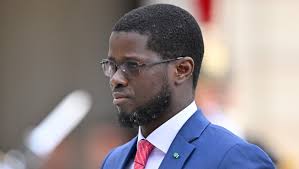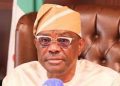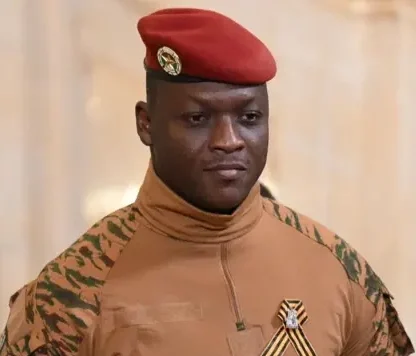
Burkina Faso has rejected what it called an “indecent” US proposal to accept deported migrants who are not Burkinabe nationals, Foreign Minister Karamoko Jean-Marie Traoré said Thursday on national television, only hours after the US Embassy in Ouagadougou suspended most visa services.
“Burkina Faso is a land of dignity, not deportation,” Traoré said, adding that the offer runs counter to the values of the junta led by Capt. Ibrahim Traoré. He suggested the embassy’s abrupt move to redirect most visa applications to the US mission in neighboring Togo could be a “pressure tactic,” citing a diplomatic note that accused some Burkinabe travelers of violating visa rules.
The US Embassy did not publicly explain the curtailment of services. The US Department of Homeland Security also did not immediately comment.
Traoré’s remarks come amid a broader, controversial US “third-country” deportation program launched this year under which at least five African states have agreed—largely via opaque bilateral arrangements—to accept migrants expelled from the United States who are neither citizens nor residents of those countries. Since July, more than 40 deportees have been transferred to Africa under the initiative, according to rights groups and local officials.
Receiving countries include Eswatini, South Sudan, Rwanda and Ghana, with a separate agreement reported with Uganda, though no transfers there have been announced. The program has drawn legal challenges and scrutiny over transparency and detention conditions. In Ghana, 11 of 14 deportees sent last month have sued the government, alleging they were held in harsh conditions at a military facility on Accra’s outskirts. In South Sudan, six deportees remain in custody at an undisclosed site, while Rwandan authorities have not said where seven deportees are being held.
Human Rights Watch said last month it reviewed written agreements showing the US offered financial incentives tied to migration and border management—$5.1 million for Eswatini and $7.5 million for Rwanda—raising concerns that cash inducements could override safeguards for due process and humane treatment.
Burkina Faso’s public refusal underscores simmering tensions in US–Africa migration diplomacy and comes as Ouagadougou recalibrates foreign partnerships following a series of coups and a pivot away from traditional Western allies. It also highlights friction over visa policies: Washington has previously used visa restrictions to pressure countries deemed uncooperative on removals, while several African governments have bristled at what they describe as unilateral measures.
For now, Burkinabe applicants seeking most US visas will be processed in Lomé, Togo, as the embassy in Ouagadougou maintains limited operations. Traoré said the government would lodge formal protests and vowed to resist any effort to make the Sahel nation a dumping ground for non-citizen deportees.