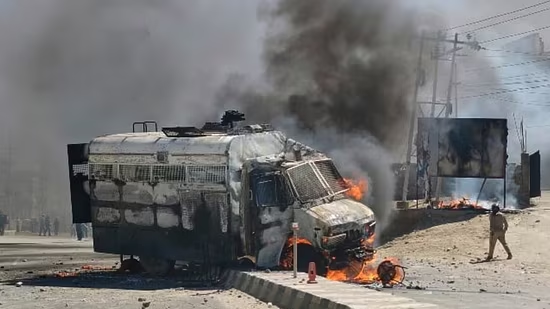
LEH, Ladakh — Indian security forces imposed a curfew in Leh on Wednesday after at least four people were killed and dozens injured in the worst unrest the Himalayan region has seen in decades. Violence erupted during protests demanding statehood and greater autonomy for Ladakh, a federal territory since 2019 when New Delhi split it from Jammu and Kashmir and imposed direct rule.
Authorities said an office of the ruling Bharatiya Janata Party (BJP) was set on fire, a police vehicle torched, and around 30 police personnel injured. Police used live fire and tear gas after crowds surged, officials said, adding that fatalities occurred when officers “resorted to firing in self-defence.”
The federal home ministry blamed activist Sonam Wangchuk—who had been on a hunger strike since 12 September—for “provocative” remarks, including references to protest movements abroad. Wangchuk denied inciting violence, called off his fast, and appealed for calm, saying anger among unemployed youth and frustration over stalled talks had boiled over.
Ladakh, a high-altitude desert bordering China and Pakistan, has a mixed Buddhist and Muslim population. While Leh’s Buddhist community long pushed for separate status and Kargil’s Muslim-majority district historically favored linkage to Indian-administered Kashmir, both sides have converged since 2019 on demands for restored statehood, job and land protections, and stronger local decision-making.
Community leaders said delays in dialogue fueled resentment. Chhering Dorje Lakrook of the Ladakh Buddhist Association condemned the violence but warned that repeated postponements and rising unemployment were deepening despair. Protest organizers told the BBC their movement remains peaceful and that they “had no idea it would turn out like this.”
The unrest unfolds amid lingering border tensions with China; a deadly clash in Galwan Valley in 2020 killed at least 20 Indian and four Chinese soldiers. Local activists argue that removing Ladakh’s former special status has left it vulnerable to outside commercial interests and weakened safeguards over culture, land, and resources. The federal government counters that talks since 2023 have produced “phenomenal results” and accuses “politically motivated individuals” of stoking unrest.
Ladakh’s Lieutenant Governor Kavinder Gupta announced an investigation and alleged attempts to incite people by comparing the protests to movements in Bangladesh and Nepal. Fresh rounds of talks between protest leaders and officials are scheduled for Thursday and Friday, with a federal committee expected to meet Ladakhi representatives on 6 October.