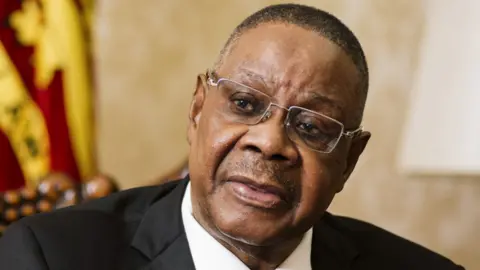
BLANTYRE/LILONGWE — Former president Peter Mutharika will return to State House after defeating incumbent Lazarus Chakwera, who conceded in a televised address hours before the final declaration. Chakwera, who has led Malawi since 2020, acknowledged securing about 33% of the vote and urged calm as the electoral commission moved toward the formal announcement.
Mutharika, 84, previously governed from 2014 to 2020. His comeback follows a fiercely contested race shaped by a painful economic backdrop: headline inflation above 27%, chronic fuel and food shortages, and a depreciating kwacha. Those pressures have been compounded by climate shocks, including the 2023 cyclone and last year’s drought, which battered harvests and strained public finances.
Celebrations broke out in parts of Blantyre, Lilongwe, and Mzuzu as supporters welcomed Mutharika’s victory, framing it as a mandate to restore stability. “The President should make sure that we have food and reduce the price of fertilizer,” said Lewis Kasama, a Lilongwe resident. “He should also work at restoring the value of the Malawi kwacha … and avoid regionalism to build the nation.”
Attention now turns to the transition and to the incoming administration’s first 100 days. Economists say urgent tasks include: stabilizing fuel supplies; securing fertilizer and seed ahead of the next planting season; and laying out a credible plan to curb inflation and rebuild reserves. Civil society groups are pressing for transparency on public debt, while farmers and traders want faster forex access to import essentials without fueling parallel-market distortions.
Mutharika’s camp has signaled a cabinet will be named quickly, with a focus on food security, fiscal discipline, and energy reliability to ease blackouts and cut business costs. Governance advocates, meanwhile, are calling for guardrails against corruption and for continuity in social protection programs as households struggle to cope with rising prices.
Electoral authorities praised largely peaceful voting and counting, though they faced logistical bottlenecks in hard-to-reach areas. Opposition parties said they would scrutinize constituency-level tallies but indicated they would respect the national result following the incumbent’s concession.
With expectations high and fiscal space tight, Mutharika’s second stint begins under intense public pressure to deliver quick wins on prices, fuel, and farm inputs and to set a longer-term path to growth that can withstand Malawi’s escalating climate risks.