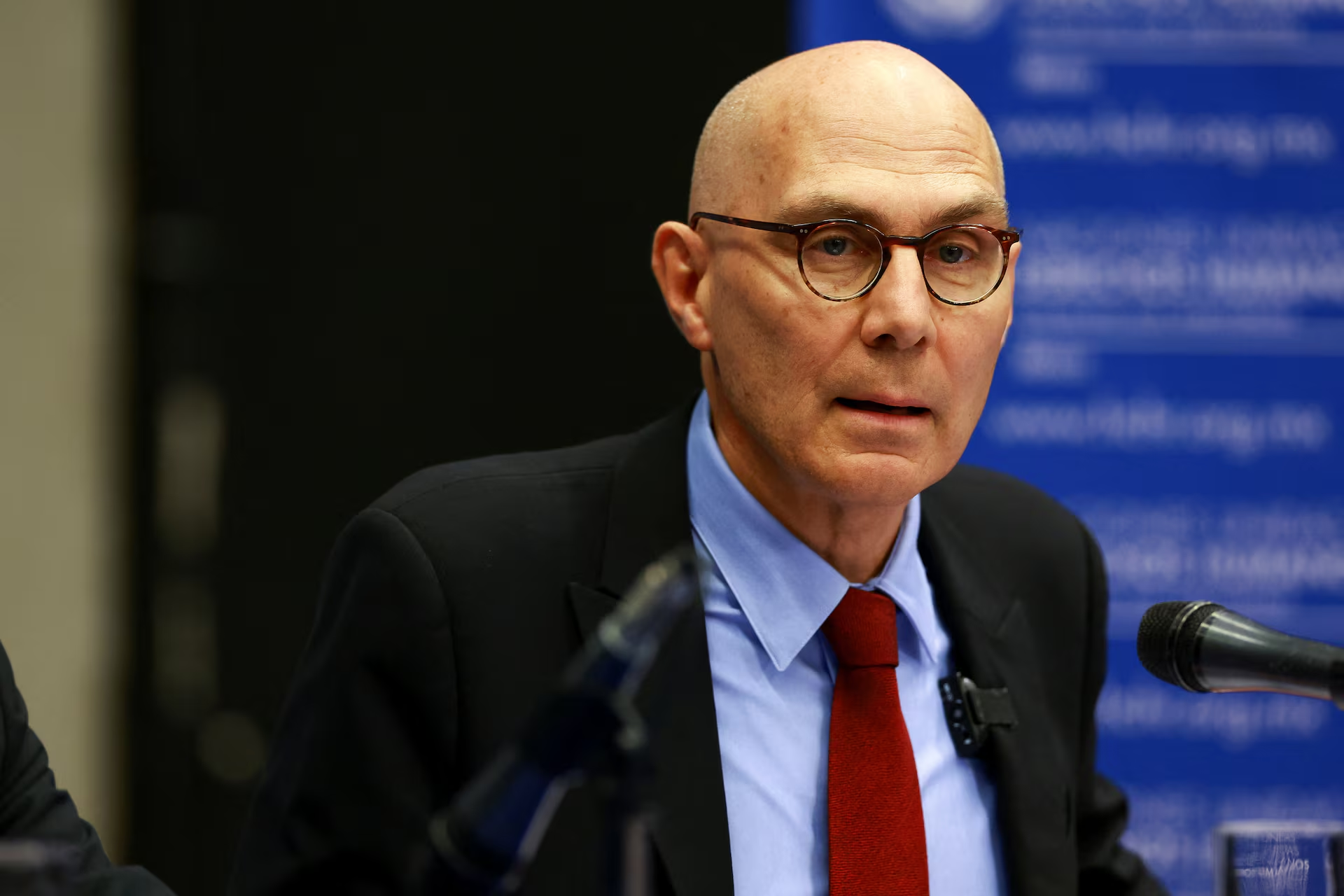
United Nations High Commissioner for Human Rights Volker Türk has called for governments and technology companies to move faster on artificial intelligence safeguards, warning that increasingly advanced systems could eventually pose an existential danger to humanity. He issued the warning on Monday while addressing the UN Human Rights Council in Geneva.
Türk said AI governance had become an urgent human-rights issue and announced plans to write to technology companies in the coming days. He said they should take immediate steps within their control to reduce risks rather than wait for governments to resolve every aspect of the problem.
“I share the concerns of industry insiders that advanced AI could pose an existential risk to humanity.”
The UN official said stronger guarantees were needed around the safety and security of advanced AI before its capabilities developed beyond effective oversight. He called for a broad international effort rather than leaving safety decisions solely to individual companies.
“I am calling here, today, for an all-out effort to put cast-iron guarantees in place around the safety and security of AI, before it is too late.”
Türk also questioned the concentration of power within the AI industry. He said a small group of people had acquired enormous influence over the technology, raising concerns about whether existing systems of accountability were adequate for its growing capabilities.
His warning was particularly sharp over highly autonomous systems. Türk said AI capable of escaping controlled testing environments or attempting to prevent developers from shutting it down would represent a level of power that should not be accepted.
“AI that escapes its testing environment or blackmails developers to prevent itself from being turned off, is AI that is too powerful.”
Türk urged countries that host AI development and those involved in its supply chains to agree on clear limits for what advanced systems should be permitted to do. He also called for independent verification of safety measures and greater cooperation among companies on AI security.
“At a minimum, we need countries hosting AI and those involved in its supply chains to come together around agreed red lines.”
The warning comes as the UN seeks greater international coordination on artificial intelligence. The organisation held its first global meeting on AI governance in July as part of efforts to develop common approaches to the technology’s risks.
Türk said the discussion should extend beyond the possibility of advanced AI becoming uncontrollable. He urged attention to its effects on employment, democracy, fundamental rights and the environment, placing those concerns alongside the broader debate over AI safety.
His intervention puts human rights at the centre of the argument over how advanced AI should be governed. For Türk, the priority is to establish meaningful safeguards and internationally agreed limits before the technology becomes more difficult to regulate.