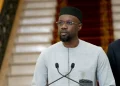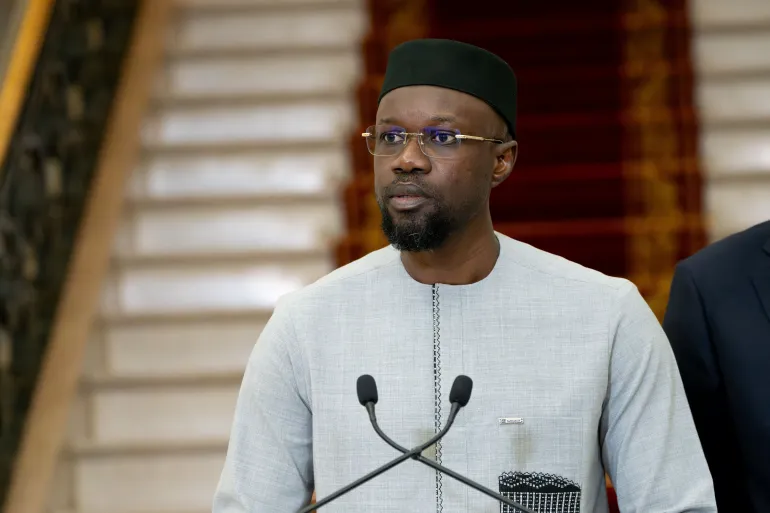
Senegal’s former Prime Minister Ousmane Sonko has been re-elected leader of the ruling Pastef party, consolidating his influence days after being removed from government by President Bassirou Diomaye Faye.
Sonko, who is now Speaker of the National Assembly, won the party leadership vote at a congress held on Saturday in Diamniadio, outside Dakar. According to a text read at the gathering, he was unanimously backed by 583 party delegates, reaffirming his control of the Pan-Africanist movement he founded and turning the party congress into a major show of political strength.
The vote comes amid a deepening rupture between Sonko and Faye, once close allies who jointly led Pastef to power in 2024. Faye won the presidency after Sonko, then one of Senegal’s most popular opposition figures, was barred from contesting the election. Sonko endorsed Faye as his replacement and later served as prime minister after the election victory.
But their alliance deteriorated after months of tension over authority, party control and the government’s response to Senegal’s worsening debt crisis. Faye dismissed Sonko as prime minister on May 22 and dissolved the government, citing the need for a reset after prolonged internal disagreements.
Four days later, lawmakers elected Sonko as Speaker of the National Assembly, keeping him at the centre of national politics and giving him a powerful platform to challenge the executive. Pastef holds 130 of the 165 seats in parliament, giving the party the ability to shape legislation and potentially censure the government.
Addressing Saturday’s congress, Sonko framed his leadership as part of a broader struggle for sovereignty and democratic renewal. “Our voice is that of a democratic revolution, popular and sovereign,” he said. He vowed that “no attempt at sabotage” would succeed, adding that the Senegalese people would provide the guarantees needed to “free” the country.
Faye, speaking on Thursday, appealed for restraint and national unity. “No quarrel, however bitter, is worth tearing apart the country we share,” he said.
The dispute has raised concerns about political deadlock in a country already under pressure from a severe fiscal crisis. The International Monetary Fund froze a $1.8 billion lending programme after authorities uncovered previously misreported debt, while Faye’s new prime minister, Ahmadou Al Aminou Lo, is seeking to restore investor confidence.
With local elections due in 2027 and a presidential vote scheduled for 2029, the Sonko-Faye rivalry is likely to shape Senegal’s politics for years.