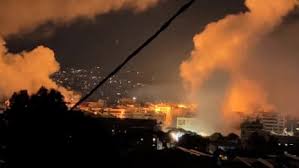
March 3, 2026 — Hostilities across the Middle East escalated sharply as Israel broadened its offensive against Iran and Tehran-backed forces, carrying out coordinated air raids in Tehran and Beirut.
Israeli officials said the strikes targeted Iranian military installations and positions linked to Hezbollah in Lebanon, following rocket and drone attacks launched by the group into northern Israel. The cross-border exchanges mark a significant expansion of the conflict.
The crisis intensified after joint U.S. and Israeli air operations inside Iran — including strikes in central Tehran — reportedly led to the death of Iran’s Supreme Leader. Tehran has since retaliated with missile and drone attacks on Israeli territory and U.S.-allied bases across the Gulf region, with reported strikes extending to Saudi Arabia, Kuwait and Bahrain.
Israeli Prime Minister Benjamin Netanyahu said military operations would continue and could conclude in a relatively short timeframe. However, U.S. officials have suggested the campaign may extend for several weeks or longer.
The violence has forced civilians to flee parts of Lebanon and disrupted key regional trade routes, effectively halting shipping through the Strait of Hormuz. The instability has rattled global energy markets, pushing oil and gas prices higher.
Diplomatic efforts to de-escalate the crisis have so far yielded little progress, and analysts warn the confrontation risks drawing in additional regional actors, potentially prolonging the conflict.