TEHRAN, Iran — Iran has reasserted strict control over the Strait of Hormuz, warning that foreign commercial and military vessels could be targeted if they fail to comply with Tehran’s rules for passage through the strategic waterway.
Iranian officials said the country would enforce regulations governing traffic through the strait, a narrow route linking the Persian Gulf to the Gulf of Oman and one of the world’s most important energy corridors. Tehran has also signalled plans for a new mechanism to manage shipping, including possible fees and restrictions on vessels tied to the United States.
The move comes as efforts to reach a U.S.-Iran agreement remain stalled. President Donald Trump said any deal must require Iran to renounce nuclear weapons and immediately reopen the Strait of Hormuz without tolls or restrictions on two-way shipping. Tehran dismissed his comments as an attempt to claim a diplomatic victory before any agreement had been reached.
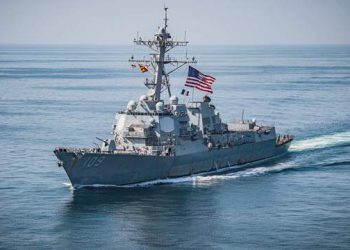
Tensions have remained high despite a fragile ceasefire. U.S. Defense Secretary Pete Hegseth said Washington was prepared to restart strikes on Iran if negotiations failed, while maintaining that the United States had enough military capacity to sustain operations in the Middle East and elsewhere.
The maritime confrontation has already disrupted commercial traffic. The Associated Press reported that U.S. forces recently struck the engine room of a Gambia-flagged cargo ship that allegedly tried to breach the U.S. blockade and reach an Iranian port. U.S. Central Command said the vessel ignored repeated warnings, making it the sixth ship stopped since the blockade began in April.
Iran has defended its actions as a sovereign response to U.S. and Israeli military pressure. Washington, however, says no country has the right to control or tax international shipping through the strait. The U.S. has also imposed sanctions on an Iranian agency accused of trying to regulate maritime traffic through Hormuz.
The dispute has major global implications. A large share of the world’s oil and liquefied natural gas moves through the Strait of Hormuz, and any prolonged disruption could increase energy prices, delay shipments and unsettle financial markets.
For now, diplomacy remains active but fragile. Iran wants sanctions relief, security guarantees and recognition of its role in the strait, while Washington is demanding unrestricted navigation and limits on Tehran’s nuclear programme. Until those gaps narrow, Hormuz remains both a bargaining chip and a flashpoint.