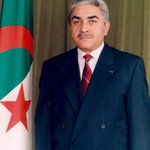
Former Algerian President Liamine Zeroual, the retired army general who steered the country through one of the bloodiest phases of its 1990s civil conflict, has died in Algiers after a prolonged illness, the presidency announced. He was born on July 3, 1941, in Batna, in eastern Algeria, and served in the National Liberation Army during the war against French colonial rule. Algerian authorities said he died at the Mohamed Seghir Nekkache Military Hospital, and the state declared national mourning, with flags ordered to fly at half-mast.
Zeroual emerged as one of Algeria’s most consequential leaders during a turbulent decade marked by insurgency and political upheaval. After serving in senior military roles and later as defence minister, he was appointed head of state in 1994 during the civil war. He then sought to restore a degree of political legitimacy by organising Algeria’s first multi-party presidential election in 1995, which he won by a wide margin. His presidency was defined by an effort to combine a hard security response with attempts at political dialogue in a country battered by violence.
Though backed by the military establishment, Zeroual cultivated a reputation as a restrained and pragmatic figure. He remained identified with a period when Algeria was trying to reassert state authority while navigating domestic and international pressure over the conflict. His years in office, from 1994 to 1999, placed him at the centre of one of the most difficult chapters in the country’s post-independence history. Even after leaving power, he remained a respected national figure, largely avoiding day-to-day politics while preserving an image of personal reserve and public dignity.
In 1998, Zeroual unexpectedly announced that he would cut short his five-year term, paving the way for Abdelaziz Bouteflika, who took office in 1999 and went on to dominate Algerian politics for two decades. His early departure surprised many observers and remains one of the defining turns in modern Algerian politics. In retirement, Zeroual was periodically urged to return to public life, but he repeatedly declined. His death closes the chapter on a leader widely seen by many Algerians as sober, disciplined and central to the state’s survival during a national crisis.