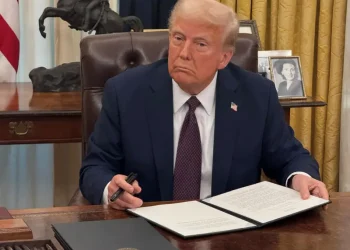
Congress on Thursday approved legislation to reopen most of the Department of Homeland Security, ending a record-setting partial shutdown that had disrupted core agencies for 75 days and exposed deep divisions within the Republican Party over immigration funding. The House passed the measure by voice vote after the Senate had already approved it, and President Donald Trump quickly signed it into law. The bill funds key DHS agencies through Sept. 30, including the Transportation Security Administration, Secret Service, FEMA, Coast Guard and the Cybersecurity and Infrastructure Security Agency.
The legislation does not include new funding for Immigration and Customs Enforcement or Border Patrol, the central point of dispute that triggered the shutdown. That omission amounts to a significant win for Democrats, who had refused to back immigration enforcement money without new limits on tactics such as raids in sensitive locations. Republicans, in turn, delayed action for weeks as Speaker Mike Johnson tried to hold his conference together and press for full border-enforcement funding.
In the end, pressure from multiple directions forced House leaders to retreat. Reuters reported that Homeland Security Secretary Markwayne Mullin had warned emergency funds used to cover payroll were nearly exhausted, while more than 1,000 TSA workers had reportedly quit during the impasse. The growing operational strain, combined with unrest among centrist Republicans, made the stalemate increasingly untenable.
The shutdown, which began on Feb. 14, became the longest DHS funding lapse in U.S. history. Its end, however, resolves only part of the larger fight. Republicans are now expected to pursue roughly $70 billion in immigration enforcement funding through the budget reconciliation process, which would allow them to bypass Democratic votes in the Senate. That means Congress has reopened much of DHS for now, but the broader battle over Trump’s immigration agenda is far from over.