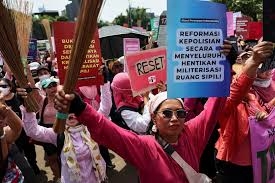
Hundreds of women marched across Indonesian cities on Wednesday, holding brooms high in the air to symbolise defiance against government policies. Their demonstrations coincided with President Joko Widodo’s departure to China for an official state visit, drawing attention to the widening divide between public grievances and government priorities.
Local reports revealed that the protesters rallied in multiple locations, demanding accountability and justice from leaders in power. They declared that by carrying brooms, they were “sweeping away corruption and injustice.” According to organizers, the act represented their determination to rid the political system of abuse and neglect.
While the protests gained momentum at home, President Widodo, popularly known as Jokowi boarded a flight to Beijing for talks with Chinese officials. His agenda is expected to centre on trade and infrastructure cooperation under China’s Belt and Road Initiative. Critics, however, argue that his absence during such widespread demonstrations underscores his failure to address pressing domestic concerns.
Protest leaders were particularly vocal about the government’s silence on the struggles of ordinary citizens. They cited rising food prices, unresolved labor disputes, and alleged misuse of public resources as key reasons behind the unrest. “We want our leaders to listen to the people instead of turning away,” one demonstrator said.
Observers noted that the timing of Jokowi’s foreign trip only deepened public frustration. While the administration is keen on strengthening international alliances, many Indonesians feel that urgent issues at home should take precedence over diplomatic engagements.
Security forces were quickly deployed to monitor the demonstrations, but protest leaders insisted their actions would remain peaceful. Instead of confrontation, they relied on the symbolic act of sweeping to deliver their message.
The simultaneous scenes — mass broom-led protests at home and diplomatic talks abroad captured the political crossroads Indonesia faces. On one side, the government is pursuing stronger global partnerships; on the other, it is confronted with rising domestic anger that demands immediate attention.