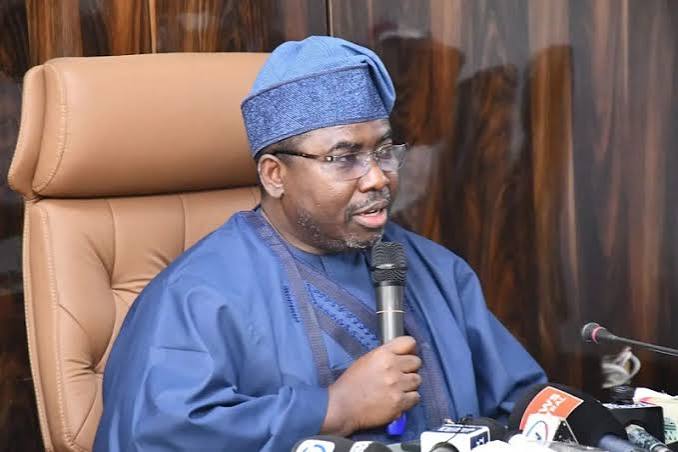
Professor Joash Amupitan, chairman of the Independent National Electoral Commission (INEC), has spoken about the personal risks attached to his position, saying threatening messages have become a regular occurrence since he assumed responsibility for leading the electoral body.
He made the revelation in Abuja on Wednesday, November 25, 2026, during a meeting with Resident Electoral Commissioners drawn from the 36 states and the Federal Capital Territory.
The meeting provided an opportunity to discuss the commission’s preparations for the 2027 general elections, including arrangements for a planned mock poll.
Amupitan told the commissioners that he was not the only official facing such pressure. Some members of the commission’s state-level leadership had also received threats, raising concerns about the treatment of those responsible for managing electoral activities.
He expressed frustration that, instead of concentrating fully on their assignments, electoral officials sometimes had to deal with attempts to intimidate them.
Describing what he had experienced, the INEC chairman said:
“On a daily basis, I receive threat messages, and sometimes, you just feel like whether those distractions are necessary.”
He also warned against treating attacks on the electoral commission as a matter affecting only its leadership or staff. In his view, efforts to weaken the institution could have wider consequences for Nigeria’s democracy.
Amupitan stressed this point during his address:
“If you think you are destroying INEC, you are only destroying democracy in Nigeria.”
Beyond the threats, the chairman spoke about the difficult relationship electoral officials often have with the public. He observed that their work attracts intense attention, with criticism sometimes extending to personal abuse.
He said the pressure does not necessarily ease even when officials believe they have performed their duties properly.
Explaining the experience of working at INEC, he remarked:
“Working for the commission is like a thankless job. No matter what you do, you are under serious scrutiny and sometimes even abused.”
His comments come at a time when the electoral body is occupied with preparations for the next general elections. The assignment involves coordinating activities across the country, with Resident Electoral Commissioners playing important roles in implementing the commission’s plans at state level.
Amupitan acknowledged that the responsibilities carried by electoral officials were not without danger. Nevertheless, he urged the commissioners to understand the demands of the positions they had accepted and continue with their work.
He said:
“We cannot just but continue to do our job. The job is hazardous and very risky, and you have put yourself in it.”
The disclosure has drawn attention to the challenges confronting the people responsible for administering Nigeria’s elections. As preparations for 2027 progress, the security of electoral personnel and their ability to perform their duties without intimidation remain important issues for the commission.