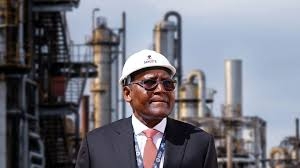
Africa’s richest man, Aliko Dangote, has sealed a multi-billion-dollar investment deal with Zimbabwe, in a project that will see the construction of a fertiliser plant and a 2,000km pipeline running from Walvis Bay in Namibia, through Botswana, to Bulawayo, Zimbabwe’s second-largest city.
Dangote met President Emmerson Mnangagwa in Harare on Wednesday, where the two sides signed a Memorandum of Understanding (MoU), marking one of the most significant private-sector investments Zimbabwe has attracted in years.
The agreement will anchor a broad package of projects across energy, cement and fertiliser production, as well as critical infrastructure development, deepening the footprint of the Dangote Group in Southern Africa.
“The broader investment is in the hundreds of millions of dollars, maybe even more than a billion,” Dangote said after the signing. “But you know we will tell you the amount as we go along. But really, it will be over a billion because of the pipeline.”
At the heart of the plan is a fuel and product pipeline that will link the Atlantic port of Walvis Bay to landlocked Zimbabwe via Botswana. The pipeline is expected to significantly lower the cost of transporting fuel and feedstock, easing one of the key structural constraints facing Zimbabwe’s productive sectors.
A spokesperson for President Mnangagwa said the project has the potential to “change Zimbabwe’s production structure”, noting that cheaper fuel imports would boost industrial competitiveness and support growth in agriculture, manufacturing and mining.
The fertiliser plant component is particularly strategic for Zimbabwe, where high input costs and foreign currency shortages have often limited access to fertiliser for farmers. Local production backed by pipeline-fed supply could reduce import dependence and stabilise prices.
The deal also signals rising investor confidence in Mnangagwa’s economic reform and re-engagement agenda, which has struggled to shake off concerns about policy inconsistency and political risk. The entry of the Dangote Group — a heavyweight in cement, energy and petrochemicals — is being read by analysts as a vote of confidence in the region’s long-term potential.
In Namibia, Dangote is already planning a major fuel storage facility in Walvis Bay, intended to strengthen regional energy security and reduce Southern Africa’s reliance on refined fuel imports from Europe and Asia.
With the MoU now signed, technical and financial work on the pipeline and associated plants is expected to intensify, laying the groundwork for what could become one of Southern Africa’s most transformative cross-border energy and industrial corridors.