Spanish authorities are preparing to receive more than 140 passengers and crew members from the MV Hondius, a Dutch-flagged cruise ship linked to a deadly hantavirus outbreak, when it arrives in Tenerife on Sunday.
Officials in the Canary Islands said the evacuation will take place under strict health controls at the port of Granadilla. Virginia Barcones, Spain’s head of emergency services, said passengers and crew will be moved through a “completely isolated, cordoned-off area” to prevent contact with the public. All those on board are expected to undergo screening before being transferred for repatriation or medical follow-up.
The United States and United Kingdom have agreed to send aircraft to evacuate their citizens. U.S. health officials are monitoring returning passengers in several states, while British passengers and crew who show no symptoms are expected to be flown home and placed in precautionary isolation.
Three people who had travelled on the vessel have died since the outbreak was identified. The World Health Organization has confirmed infections among people connected to the ship, while cruise operator Oceanwide Expeditions said Friday that none of the remaining passengers or crew on board was showing symptoms of possible hantavirus infection.
The WHO has sought to calm public concern, stressing that the risk to the wider population remains low. A flight attendant who briefly boarded a plane used by an infected cruise passenger has tested negative, easing fears of wider transmission. WHO spokesman Christian Lindmeier said the outbreak should not be compared with Covid-19, adding that the risk remains “absolutely low.”
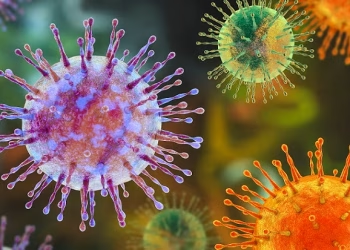
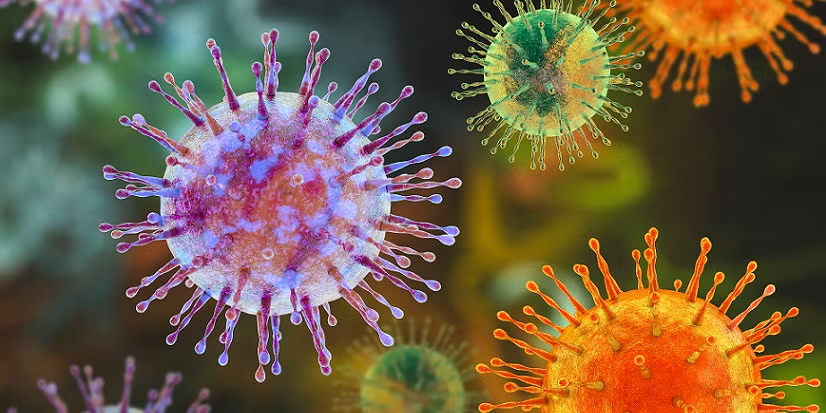
Hantavirus is most commonly spread through exposure to infected rodents’ urine, droppings or saliva. However, the strain linked to the MV Hondius is the Andes virus, a rare form capable of limited person-to-person transmission, usually through close contact. Symptoms can take between one and eight weeks to appear and may include fever, muscle aches, respiratory distress and, in severe cases, organ failure.
The outbreak has unsettled residents and businesses in Tenerife, where memories of the Covid-19 pandemic remain fresh. But health authorities insist the docking is a controlled humanitarian and medical operation, not a general public health threat.
For now, Spain’s priority is to remove passengers safely, identify any infections quickly and ensure exposed travellers are monitored once they return home.