JEDDAH
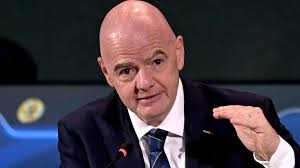
The Union of Arab Football Associations has publicly backed FIFA President Gianni Infantino for another term, handing the embattled football chief an important show of support as opposition to his leadership grows ahead of next year’s presidential election.
The UAFA, which brings together 22 national football associations across Africa and Asia, announced its position following its 81st board meeting in Jeddah, Saudi Arabia, on Thursday. The organisation praised FIFA’s recent efforts to strengthen cooperation with national, regional and continental football bodies and said Infantino had helped reinforce unity within the global game. The endorsement does not automatically guarantee how each of the UAFA’s individual members will vote, but it strengthens Infantino’s position in a region that has become increasingly influential within international football.
Six Arab football association presidents, including representatives from Qatar and 2030 World Cup co-host Morocco, had already backed Infantino in August. The Gulf Football Federation, representing eight national associations, also declared its support earlier this week. Infantino, FIFA president since 2016, is seeking re-election when the organisation’s 211 member associations vote in March 2027.
His campaign has faced growing resistance since July, when a controversial proposal to sell stakes in FIFA competitions — including the World Cup — to private investors triggered criticism over governance and consultation. The plan was eventually abandoned. The backlash has been particularly strong in Europe.
Infantino’s home federation, Switzerland, withdrew its endorsement this week, citing concerns about FIFA’s leadership, governance, transparency and decision-making. Football associations including England, Wales, France and Serbia have also withdrawn support, while European governing body UEFA has said it intends to put forward a rival candidate before the November nomination deadline. Seeking to address the criticism, Infantino recently proposed an independent review of FIFA’s decision-making processes and ordered an assessment of demands for greater financial distributions to member federations from FIFA’s multibillion-dollar reserves.
The widening divide is setting up what could become the most serious challenge to Infantino’s leadership since he took control of FIFA following the corruption crisis that engulfed world football’s governing body.
The UAFA intervention therefore carries significance beyond Arab football. As European opposition consolidates, support from associations in the Middle East, Africa and Asia could become increasingly important in determining whether Infantino secures another term or faces a genuinely competitive FIFA presidential election.