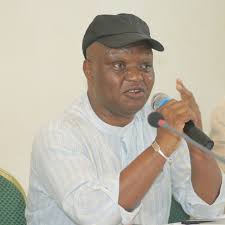
Cameroonian filmmaker, writer and cultural promoter Bassek Ba Kobhio has died at the age of 69, marking the loss of one of the leading figures in Central African cinema.
Ba Kobhio died on May 12, 2026, in Yaoundé, according to Cameroonian media and the Écrans Noirs association, the film festival he founded and led for decades. His death has prompted tributes across the African film community, where he was regarded as a director, institution-builder and advocate for African storytelling.
Before turning fully to cinema, Ba Kobhio made his voice heard through politically engaged writing. His early works, including Les eaux qui débordent in 1984 and Cameroun, la fin du maquis? in 1986, reflected his interest in power, memory, justice and the condition of ordinary people.
He later brought those themes to the screen. His 1991 film Sango Malo, also known as Le Maître du Canton, tells the story of a rural schoolteacher who challenges an oppressive local order. The film, adapted from his own novel, won the Audience Award at the Milan African Film Festival and became one of his best-known works.
Ba Kobhio went on to direct Le Grand Blanc de Lambaréné, a post-colonial portrait of Albert Schweitzer, and later co-directed Le Silence de la forêt, regarded as the first feature film shot in the Central African Republic.
Yet his influence extended far beyond his own films. In the 1990s, he founded Écrans Noirs in Yaoundé, a festival created to promote African cinema and give visibility to filmmakers often excluded from global distribution networks. The festival grew into one of Central Africa’s most important cultural platforms.
Despite limited resources, Ba Kobhio sustained the festival, supported young filmmakers and helped build training opportunities for emerging Cameroonian talent, including film classes developed in partnership with UNESCO and cultural institutions.
His legacy rests not only in the films he made, but in the space he created for others. For Cameroon and African cinema, Ba Kobhio leaves behind a body of work rooted in resistance, identity and dignity — and an institution that continues to carry his belief that African stories deserve the centre of the screen.