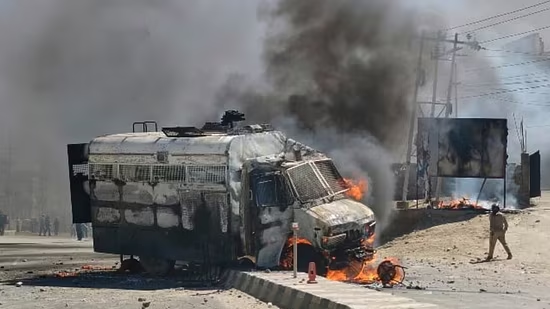
Protests in Bolivia have intensified as workers, farmers, teachers and transport groups increase pressure on the government over fuel shortages, rising prices, labour demands and controversial economic reforms.
Demonstrators marched through La Paz this week under the banner of the Bolivian Workers’ Central, COB, the country’s largest labour federation, demanding stronger government action to protect wages, jobs and household purchasing power. The protests come as Bolivia faces one of its deepest economic crises in decades, driven by shortages of dollars and fuel, high inflation and pressure on public finances.
The unrest follows months of mounting frustration over long queues at fuel stations, higher transport costs and the weakening availability of foreign currency. In January, the government declared an “energy and social emergency,” citing inflation, fuel supply problems and a broader structural economic crisis. Authorities also allowed exceptional private importation and sale of fuel as part of efforts to ease shortages.
Protest leaders say the government’s measures have not gone far enough to shield working-class Bolivians from the impact of austerity, subsidy changes and price increases. Some groups are also demanding the approval of land-related legislation, better labour protections and a reversal of policies they say have shifted the burden of the crisis onto ordinary citizens.
The fuel issue remains especially sensitive. Bolivia has long relied on subsidised gasoline and diesel, but declining natural gas output, falling export revenue and pressure on foreign reserves have made the policy increasingly difficult to sustain. The shortage of dollars has also complicated imports and contributed to higher costs across the economy. Reuters previously reported that the government even turned to cryptocurrency mechanisms to help pay for energy imports amid the dollar and fuel squeeze.
The crisis has placed President Rodrigo Paz’s administration under growing political pressure. His government has announced multiple decrees and policy measures aimed at stabilising fuel supply, inflation and access to foreign currency, but unions and social movements argue that the response has been insufficient and uneven.
For many Bolivians, the demonstrations reflect more than a dispute over individual policies. They are a sign of anger over a deteriorating standard of living, uncertainty about the country’s economic model and distrust of political leaders.
With protests expanding and key sectors threatening further action, the government faces a difficult balancing act: restoring economic stability without provoking a deeper social backlash.