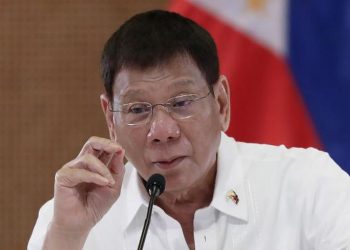
Former Philippine president Rodrigo Duterte will face trial at the International Criminal Court after judges unanimously confirmed all charges of crimes against humanity against him, marking a major step in one of the most closely watched cases in the court’s recent history. The ICC said on April 23 that there were “substantial grounds to believe” Duterte was responsible for murder and attempted murder linked to his anti-drug campaign, and formally committed him to trial.
If proceedings go ahead, Duterte would become the first former Asian head of state to stand trial before the Hague-based court. The case comes at a difficult moment for the ICC, which has faced sharp political pressure, including U.S. sanctions against key officials after its arrest warrants in other high-profile international cases.
Prosecutors allege Duterte played a central role in a campaign of extrajudicial killings that began while he was mayor of Davao City and intensified during his presidency. The ICC confirmed three counts of murder as crimes against humanity, tied to 76 alleged killings between 2013 and 2018, which prosecutors described as emblematic of a much broader pattern of deadly violence against suspected drug users and dealers. Rights groups have long said the total death toll ran into the thousands.
During confirmation hearings in February, prosecutors argued that Duterte had overseen or encouraged a state-backed system of killings through police units and death squads. They cited speeches in which he repeatedly vowed to kill drug suspects, saying his rhetoric was backed by action. Duterte’s defence rejected that interpretation, insisting the former president is innocent and arguing there is no direct proof linking his speeches to the crimes alleged by the prosecution. Defence lawyer Nicholas Kaufman said the claim that killings were carried out as state policy would be shown at trial to be “complete fiction.”
Duterte’s lawyers have also argued that the 81-year-old is too frail mentally to meaningfully follow proceedings. He did not attend the February hearings, and Reuters reported that he has appeared only once since his March 2025 arrest, by video link, looking tired and at times confused. Still, ICC appeals judges this week upheld the court’s jurisdiction, rejecting a defence bid to halt the case and secure his release.
No trial date has yet been set. The ICC must now constitute a trial chamber, and Reuters reported that proceedings may still be months away. For prosecutors and victims’ families, however, the ruling is already being treated as a milestone in the long quest for accountability over one of the deadliest anti-drug campaigns in recent history.