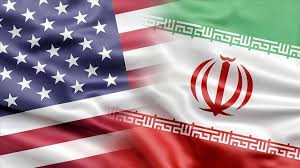
High-stakes talks between the United States and Iran ended in Islamabad without an agreement, casting fresh doubt over a fragile ceasefire and underscoring how far apart the two sides remain on nuclear guarantees, regional security and control of the Strait of Hormuz. U.S. Vice President JD Vance said the negotiations, which lasted about 21 hours, broke down because Iran refused to accept Washington’s core demand for a binding commitment not to pursue nuclear weapons.
The talks were notable in themselves: Reuters and the Associated Press described them as the first direct, face-to-face negotiations between senior U.S. and Iranian officials since Iran’s 1979 Islamic Revolution. The American delegation was led by Vance, while Iran’s side was headed by Parliament Speaker Mohammad Bagher Qalibaf, with Pakistan acting as mediator. Pakistani Prime Minister Shehbaz Sharif met both delegations separately, underlining Islamabad’s sudden diplomatic importance in a crisis that has roiled the wider Middle East and disrupted global energy markets.
Vance said before leaving Pakistan that the U.S. had come “in good faith” and had put forward what he described as a final offer, but that Iran “chose not to accept our terms.” Tehran struck a similarly hard tone afterward. Iran’s foreign ministry described the talks as “intensive” but accused Washington of making “excessive demands and unlawful requests,” suggesting the diplomatic channel remains open only in a limited technical sense. Reuters reported that although the main talks paused without a deal, lower-level exchanges may continue.
One of the biggest unresolved issues is the Strait of Hormuz, the strategic waterway through which roughly a fifth of global traded oil normally passes. U.S. Central Command said two Navy destroyers had sailed through the strait as preparations began to clear sea mines, but Iran denied the American account. That dispute matters because the route remains only partially functional, with shipping confidence still badly shaken and energy markets under pressure.
The diplomacy is also being complicated by continued fighting on the Israel-Lebanon front. Reuters reported earlier this week that the U.S. does not accept Iran’s view that the ceasefire should automatically include Lebanon, where Israel has continued strikes on Hezbollah targets. Israeli Prime Minister Benjamin Netanyahu has meanwhile said he wants a peace arrangement with Lebanon that “will last,” but for now the violence there remains one of the clearest threats to any broader de-escalation.
President Donald Trump sought to downplay the setback, saying it “makes no difference” whether a deal is reached because, in his view, “regardless what happens, we win.” But the mood around the Islamabad talks was notably less triumphant. With no agreement, no full reopening of Hormuz and no clear ceasefire extension, the region remains in a precarious holding pattern