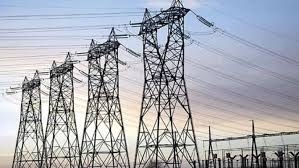
Nigeria’s electricity sector is facing a fresh financial shock after new industry data showed the Federal Government paid only about N76.95 billion of the N1.928 trillion required for tariff shortfalls in 2025, leaving a massive funding gap that has worsened pressure across the power value chain. The figures, drawn from tariff and market analyses by the Nigerian Electricity Regulatory Commission, underscore the scale of the subsidy burden still weighing on the country’s privatised but fragile electricity market. Reuters had already reported in 2025 that Nigeria’s tariff shortfall had narrowed from about 3 trillion naira to around 1.9 trillion naira after a hike for top-tier consumers, but the latest numbers show the burden remains severe.
According to the data, subsidy obligations stood at N536.40 billion in the first quarter of 2025, N514.35 billion in the second quarter, and N458.75 billion in the third quarter. That pattern points to an annual requirement of roughly N1.93 trillion, far above the N958 billion budgeted by the government and even further beyond the N76.95 billion actually released, according to the figures cited in your draft. NERC’s third-quarter report confirmed the Q3 subsidy at N458.75 billion, down from N514.35 billion in Q2, but still large enough to keep the market under strain.
The consequences are rippling through the system. Nigeria’s electricity market depends on payments moving from distribution companies to the Nigerian Bulk Electricity Trading Plc, then to generation companies and gas suppliers. When those obligations are not fully settled, the result is predictable: weaker cash flow, lower gas supply to thermal plants, and worsening outages for homes and businesses. Reuters reported in August 2025 that the government had approved a phased refinancing plan for about 4 trillion naira in sector debt to stabilise the industry, a sign of how deep the liquidity crisis has become.
The wider operating environment remains difficult. NERC’s quarterly report showed average hourly generation in the third quarter of 2025 fell to 4,179.15MWh/h from 4,501.06MWh/h in the previous quarter, reflecting persistent supply and infrastructure constraints. Reuters also reported in December 2025 that Nigeria approved 185 billion naira to help clear gas debts in a bid to improve electricity supply, highlighting the direct link between unpaid obligations and underperforming generation.
With subsidy requirements for January 2026 alone reportedly put at N126.48 billion, the market is entering the new year under heavy financial stress. Unless the government improves funding, enforces more sustainable tariffs and tackles structural weaknesses in transmission, gas supply and revenue collection, the sector’s crisis is likely to deepen further, with serious consequences for economic activity and national productivity.