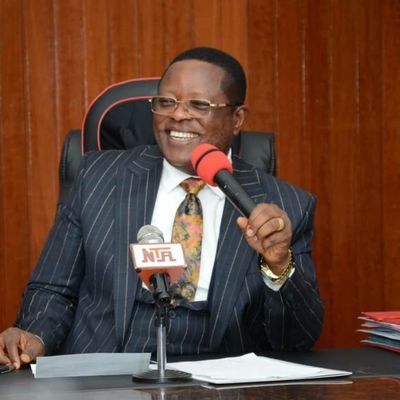
Nigeria’s Minister of Works, David Umahi, has warned that the indiscriminate parking of fuel tankers and other heavy-duty vehicles on newly completed sections of the East-West Road in Rivers State could severely damage the infrastructure and shorten its lifespan. He gave the warning during an inspection of the Aleto Bridge and Akpajo-Onne axis of the project on Saturday, as the Federal Government pushed road users to treat the multi-billion-naira asset as public property that must be protected.
Umahi said he had personally seen long rows of fuel tankers parked on a completed stretch of the road, turning the carriageway into what he described as a makeshift parking lot. “No road project anywhere in the world is designed for static loads,” he said, warning that prolonged pressure from stationary heavy trucks would destroy the pavement. Punch reported that the minister said early cracks were already being noticed, adding that repairing such damage would place an extra burden on government.
The minister said the stakes were especially high because the project now exceeds ₦230 billion in value, with phase one put at about ₦156 billion and phase two at ₦83 billion. He called for greater discipline among transport operators and said designated truck parks would be necessary, but insisted that even with parking areas in place, drivers must stop using completed road corridors as holding bays.
Despite his concern, Umahi praised contractor Reynolds Construction Company (RCC) for the pace and quality of work, describing the project as highly technical because of the terrain and engineering requirements. He also credited President Bola Tinubu with ensuring the continuation of work after support from the Nigerian National Petroleum Company Limited ended in August 2025, saying an alternative funding mechanism was quickly approved to avoid disruption.
The Aleto Bridge project, redesigned with concrete pavement, solar-powered lighting and reinforced structural features, is expected to reach a key milestone before May 25, with the first phase due for completion by August 2026. Umahi also said young Nigerian engineers would be integrated into the works through a federal mentorship programme, framing the project not only as a strategic transport corridor but also as a training ground for the next generation of infrastructure professionals.