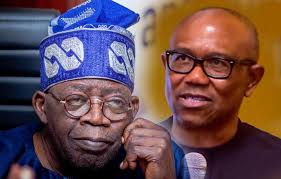
The launch of the Village Boys Movement on Thursday marks the emergence of new grassroots political activity ahead of Nigeria’s 2027 presidential elections, as supporters of President Bola Tinubu and former Anambra State governor Peter Obi step up mobilisation efforts.
Speaking at the unveiling, convener Maazị Tochukwu Ezeoke, who styles himself National Village Headmaster, described the platform as a “disciplined nationwide movement” built on “earned prosperity and service-driven leadership,” rather than proximity to power or displays of wealth.
Ezeoke positioned the initiative as a moral alternative to what he termed the “City Boy culture,” a political trend he said rewards access to state resources over measurable productivity. “We represent a Nigeria that works before it earns and earns before it spends,” he said, outlining the movement’s guiding principles: wealth must follow value, power must follow service, and leadership must follow accountability.
Clarifying that the critique was not geographically motivated, he added, “This is not hostility toward cities. It is a moral contrast. The issue is not geography but the source of wealth, the ethics of leadership, and the structure of accountability.”
Citing Peter Obi as an example of disciplined governance, Ezeoke praised the former governor’s record on fiscal prudence and transparency, but framed the endorsement as principle-based: “He is not a messiah. Nigeria does not require a saviour figure. Nigeria requires standards.”
The movement’s motto, “Unbought. Unafraid. Unstoppable,” reflects its stand against vote-buying, political intimidation, and patronage. As part of its initial mobilisation, the group announced plans for a Two Million Man March across Nigeria’s 36 states and the Federal Capital Territory. Ezeoke emphasised that the rallies would be peaceful, lawful, and volunteer-funded: “They will be powered by conviction, organised by volunteers, and sustained by citizens who are unbought, unafraid, and unstoppable.”
Beyond mass rallies, the movement plans to develop a grassroots network “village by village, ward by ward, polling unit by polling unit,” focusing on civic education, budget monitoring, and election integrity. Ezeoke urged young Nigerians to resist inducement and intimidation at the polls: “If you refuse to sell your vote, you are unbought. If you refuse to be intimidated, you are unafraid. If you organise lawfully and consistently, you are unstoppable.”
The Village Boys Movement aims to foster a long-term shift in Nigeria’s political culture, prioritising productivity, accountability, and ethical governance over patronage.