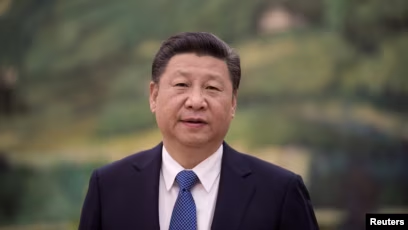
ADDIS ABABA/BEIJING — Chinese President Xi Jinping said China will eliminate tariffs on imports from all African countries with which it has diplomatic ties from May 1, 2026, a move that would expand Beijing’s preferential trade regime across nearly the entire continent. The policy covers 53 African countries and excludes Eswatini, which recognizes Taiwan.
The announcement, made alongside this weekend’s African Union summit diplomacy, builds on commitments China flagged in 2025 to broaden duty-free access beyond the least-developed-country group. Reuters previously reported that Beijing had already pledged zero-tariff treatment for all 53 diplomatic partners in Africa, with additional support for poorer countries to help them compete under the wider scheme.
China is already Africa’s largest bilateral trading partner, and analysts say the expanded tariff waiver could increase African exporters’ access to China—especially for countries with stronger manufacturing or agro-processing bases—if customs implementation is smooth and non-tariff barriers are limited. Reuters noted that middle-income African economies could be among those gaining most from broader market access. The policy arrives amid shifting global trade politics and renewed competition for African markets and commodities. Beijing has framed the decision as support for African development and South-South cooperation, while also deepening its economic diplomacy under FOCAC and Belt and Road-linked relationships.
Still, trade specialists caution that tariff elimination alone may not transform export performance. Key constraints remain logistics costs, product standards compliance, access to trade finance, and limited value addition in many African economies. In practice, countries with ready-to-export goods and established Chinese buyer networks are likely to benefit first, while others may need policy and infrastructure support to convert the opportunity into measurable gains.
For African governments, the new regime could open room to diversify away from traditional markets at a time of external uncertainty. For Beijing, it strengthens political and commercial ties with a continent central to long-term supply chains, energy transition minerals, and future consumer demand.