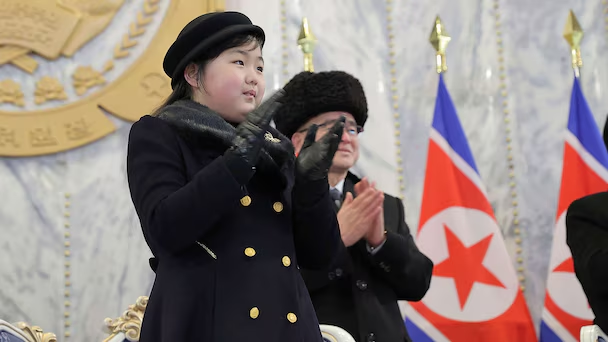
SEOUL, — North Korean leader Kim Jong Un appears to have moved his teenage daughter, widely believed to be Kim Ju Ae, from “training” into an internal successor-designation stage, according to a closed briefing by South Korea’s National Intelligence Service (NIS) to lawmakers on Thursday.
Lawmakers said the NIS based its assessment on Ju Ae’s increasingly prominent appearances at high-level state events, including military ceremonies and symbolic visits tied to regime legitimacy. Seoul’s intelligence agency is now watching whether she appears at the upcoming Workers’ Party congress and whether she receives a formal political title—both potential indicators that succession planning is becoming more explicit. The assessment marks Seoul’s strongest public signal yet that a fourth-generation Kim succession may be underway. Ju Ae first emerged publicly in 2022 at strategic weapons events and has since appeared repeatedly in North Korean state media at moments typically reserved for top political messaging.
A key recent milestone was her overseas protocol exposure during Kim’s 2025 visit to China—her first known foreign trip—which analysts viewed as preparation for statecraft visibility beyond domestic propaganda optics. Even so, uncertainty remains high. North Korea has not publicly identified her as heir, and experts note practical constraints: Ju Ae is believed to be around 13, below the age normally associated with formal party advancement. South Korean analysts previously argued that any formal succession declaration at this stage would likely be symbolic and staged over years, not immediate.
The timing is notable. The party congress later this month is expected to lay out North Korea’s five-year priorities on foreign policy, military posture, and nuclear strategy. If Ju Ae is placed more centrally there, it would likely be read as deliberate regime signaling about continuity and dynastic stability amid heightened regional tension.
The gender dimension also remains significant. A female successor would challenge long-standing assumptions about leadership succession in North Korea’s patriarchal political culture, though Kim Yo Jong’s senior influence has already shown women can hold substantial power within the ruling system. Bottom line: South Korea’s intelligence view has shifted from “possible heir training” to “active designation,” but the decisive test is whether Pyongyang begins formalizing Ju Ae’s status through titles, party roles, and protocol rank at major state events in 2026