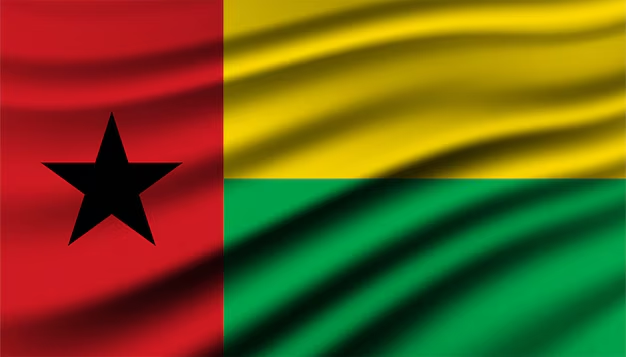
BISSAU — Opposition politician Fernando Dias has rejected accusations that he was behind this week’s military takeover in Guinea-Bissau, insisting he actually won last week’s disputed presidential election.
Dias was the main challenger to incumbent President Umaro Sissoco Embaló in the tightly contested vote, which both men have claimed to have won. Before provisional results could be announced, the military seized power on Wednesday, dissolving state institutions and halting the electoral process.
On Thursday, the junta named General Horta Nta Na Man, a former close ally of Embaló, as transitional president to lead a one-year transition. The appointment has fuelled suspicions among opposition figures and civil society groups that the coup is aimed at blocking an unfavourable election result rather than preventing instability, as the army claims.
In a video message posted online, Dias said he had certified tally sheets proving his victory and dismissed suggestions he orchestrated the putsch.
“I am the winner of the elections. I have polling station reports confirming my victory. I won the elections, so how could I possibly orchestrate a coup? After all, who is behind this?” he asked.
Embaló’s whereabouts remain unclear. On Wednesday he told French media he had been arrested by soldiers, but the military has not confirmed his status or location.
The opposition has called for nationwide protests to demand the publication of official election results and a swift return to constitutional order. However, by Thursday morning, life in the capital, Bissau, appeared largely calm, with shops reopening and public transport gradually returning, even as uncertainty lingered over the country’s political future.
Tensions had been building ahead of the vote after the powerful African Party for the Independence of Guinea and Cape Verde (PAIGC) was barred from contesting. Its leader, former prime minister and 2019 presidential runner-up Domingos Simões Pereira, threw his weight behind Dias, making him the standard-bearer for much of the traditional opposition.
The reported takeover extends Guinea-Bissau’s long history of coups and attempted coups since independence from Portugal in 1974. It also adds to a worrying wave of military interventions across West Africa, where analysts say contested elections and weak institutions are increasingly emboldening armed forces to step into politics.