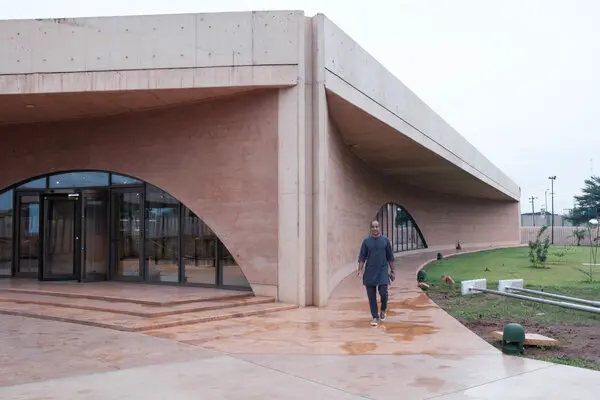
Nigeria’s much-anticipated Museum of West African Art (Mowaa) in Benin City has been caught in a political storm, forcing the last-minute postponement of its public opening.
The state-of-the-art, six-hectare cultural campus in Edo State – designed in part by renowned British-Ghanaian architect Sir David Adjaye – was due to open this week as a new hub for West African creativity and research. Instead, it has become the focus of a bitter tussle over control, identity and history.
Mowaa, conceived by businessman and executive director Phillip Ihenacho, aims to fuse archaeology, conservation science and contemporary art. The non-profit institution says it has already attracted $25m (£19m) in funding from international partners including the French and German governments, the British Museum and the Edo State government. It projects up to 30,000 direct and indirect jobs and an $80m (£60m) annual boost to the regional creative economy.
But Edo State has revoked the museum’s land use, claiming the institution breached original documentation by dropping “Edo” from its founding name, the Edo Museum of West African Art. The move followed protests in which crowds stormed the campus, demanding it be renamed the Benin Royal Museum and placed under the authority of the Oba of Benin, Ewuare II. Some foreign guests had to be escorted out by police.
The dispute is rooted in local political rivalries and the highly charged question of who should control the famed Benin Bronzes – royal artworks looted by British forces in 1897 and now at the centre of global restitution efforts. Though around 150 pieces have been returned to Nigeria, federal authorities previously ruled that any repatriated bronzes belong to the Oba, not the state-backed museum project championed by former Edo governor Godwin Obaseki.
Ihenacho says Mowaa was never designed solely as a home for the bronzes and holds no legal title to them. Instead, he argues, its mission is broader: to inspire contemporary African creativity across film, photography, music, dance, fashion and visual art, while studying historical works and techniques.
Inside the new complex, conservators, researchers and young artists from across West Africa have already begun using its labs and galleries. The planned inaugural exhibition, Homecoming, features major names such as Yinka Shonibare, Toyin Ojih Odutola, Precious Okoyomon and Tunji Adeniyi-Jones. Shonibare’s centrepiece work, Monument to the Restitution of the Mind and Soul – a clay pyramid of Benin Bronze replicas – reflects on trauma, loss and spiritual connection to the land.
President Bola Tinubu has set up a high-level committee led by Culture Minister Hannatu Musawa to mediate. She has called for “collaborative approaches that respect both traditional custodianship and modern institutional structures.”
For now, Mowaa’s opening remains on hold, as its staff press on with preparations and hope the museum will ultimately be defined by its creative future, not just its contested past.