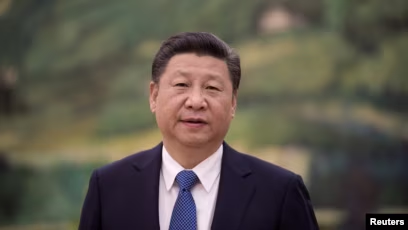
Chinese President Xi Jinping has pledged $10 million to UN Women and called for gender equality to be “truly internalized” across society, telling a high-level summit that women’s participation in decision-making is essential to peace, development and social stability.
Leaders from Ghana, Iceland, Sri Lanka, Dominica and Mozambique attended the gathering, which spotlighted national efforts to boost women’s representation. Ghana—an enduring Chinese partner—recently launched its Affirmative Action (Gender Equity) Act, underscoring shared rhetoric on inclusive governance and gender parity.
China points to rising female attainment in education and work: women now account for roughly half of higher-education students and 43% of the workforce. Yet the country continues to face criticism over the scarcity of women in senior political roles. In 2022, no women sat on the Chinese Communist Party’s 24-member Politburo or its seven-member Standing Committee—an absence UN officials have urged Beijing to address through quotas and parity laws.
While Xi framed women’s advancement as central to national progress and family wellbeing, experts note widening gender gaps under his tenure, citing stalled promotions to top posts and patchy enforcement of anti-discrimination rules in hiring and pay. Advocates argue that durable change will require structural reforms: legally mandated targets for leadership, stronger protections and redress for workplace bias, expanded childcare and eldercare to reduce the unpaid-care burden, and transparent reporting on representation across public and private sectors.
The summit’s takeaway was blunt: financial commitments matter, but credibility will be judged on outcomes. For Beijing, that means converting headline pledges and educational gains into tangible power for women at the highest levels of politics and business. For partner countries, it means translating new laws—like Ghana’s affirmative-action framework—into enforcement, budgets and seats at the table.