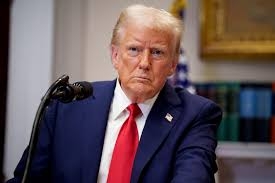
Washington — President Donald Trump on Saturday said his administration has “identified funds” to ensure active-duty military personnel are paid on October 15 if the federal shutdown extends into a third week, escalating a standoff with Democrats over government funding.
In a post on Truth Social, Trump said he would direct Secretary of War Pete Hegseth to “use all available funds to get our Troops PAID.” A spokesperson for the White House Office of Management and Budget said the money would come from unobligated research, development, test and evaluation (RDT&E) accounts that remain available for up to two years.
In a separate statement, the Pentagon said it had located about $8 billion in unobligated prior-year RDT&E funds that could be used to issue October 15 paychecks if the lapse in appropriations continues. It was not immediately clear whether Coast Guard personnel—who fall under the Department of Homeland Security—would be covered. During the 2018–19 shutdown, active-duty Coast Guard members temporarily missed paychecks before receiving back pay.
The maneuver would mark a significant— and likely controversial—use of appropriated dollars during a shutdown. Legal experts said the move could face challenges, noting that Congress controls federal spending and that the Antideficiency Act sharply restricts government obligations during funding lapses, with limited exceptions for activities necessary to protect life and property or tied to multi-year appropriations.
The announcement followed Republicans’ rejection of a stand-alone bill to guarantee military pay during the shutdown, a tactic GOP leaders have used to increase pressure on Democrats to accept a short-term funding extension without additional healthcare provisions. Democrats have insisted any temporary spending measure include extensions of expiring health insurance subsidies and Medicaid protections.
Trump, who last weekend told sailors in Norfolk that “we will get our service members every last penny,” framed the internal reprogramming as a stopgap to prevent immediate hardship for troops as negotiations stall on Capitol Hill. The Senate is slated to take up another continuing-resolution vote early next week; the House remains in recess, limiting the prospects for rapid legislative action if the Senate passes a modified bill.
Even if October 15 pay is issued, uncertainty would persist for November unless Congress enacts a funding measure. The Pentagon did not specify how long the identified funds could sustain payroll, and officials declined to detail whether any research programs would be paused or slowed to free up the money.