
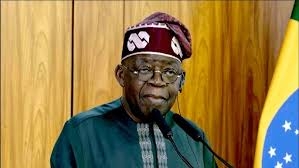
Abuja — President Bola Tinubu has asked the Senate to approve plans to raise $2.35 billion from external sources to partly finance the 2025 budget deficit and refinance a Eurobond maturing in November 2025. He also requested authorisation to issue a debut $500 million sovereign Sukuk in the international capital market to fund priority infrastructure.
Senate President Godswill Akpabio read the president’s letter during plenary, before referring it to the Committee on Local and Foreign Debts chaired by Senator Aliyu Wamakko (APC, Sokoto North). The panel was directed to report back within a week.
According to the request, the $2.35 billion package comprises new external borrowings of ₦1.843 trillion (about $1.229 billion at ₦1,500/$) to help implement the 2025 Appropriation Act, and $1.118 billion to refinance a portion of Eurobonds issued in 2018. The 2025 budget envisages ₦9.276 trillion in new borrowings to bridge the deficit, of which ₦1.843 trillion is to be sourced externally.
Tinubu said the funds would be raised through instruments and facilities available in the International Capital Market (ICM)—including Eurobonds, syndicated loans, bridge finance or direct multilateral borrowings—subject to market conditions. He described rolling over the 2018 Eurobond via refinancing as standard practice designed to avoid default and smooth Nigeria’s debt-service profile.
“The Federal Ministry of Finance and the Debt Management Office will work with transaction advisers to secure the most competitive terms,” the president wrote, stressing that Nigeria remains a regular ICM participant and is “well-positioned” to access the targeted amounts.
Separately, Tinubu requested approval to float a stand-alone $500 million sovereign Sukuk overseas, potentially credit-enhanced by the Islamic Corporation for the Insurance of Investment and Export Credit (ICIEC), a member of the Islamic Development Bank Group. Since 2017, Nigeria has raised ₦1.392 trillion through domestic Sukuk issues, funding dozens of road and other capital projects. An international Sukuk, the letter said, would diversify the investor base, deepen the sovereign debt market and mobilise additional long-term capital for infrastructure.
“There is a need to complement domestic issuance with external resources to close infrastructure funding gaps and sustain investor confidence,” the president noted, urging swift legislative approval to support fiscal stability and growth objectives.
If approved, the borrowing plan will add to Nigeria’s external funding mix in 2025 while allowing the DMO to execute a liability-management operation on the due Eurobond. The Senate committee’s review will examine borrowing costs, macro-fiscal implications and project pipelines to be financed from both the conventional and non-interest instruments.