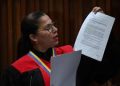

CARACAS/WASHINGTON — Venezuela’s interim president, Delcy Rodríguez, said Thursday that her government is prepared to confront the United States “diplomatically” following the Jan. 3 U.S. operation that removed Nicolás Maduro from power, even as Washington presses for rapid policy shifts tied to oil access and security cooperation.
Rodríguez, who served as Maduro’s vice president, has been installed as interim leader under a transitional arrangement that followed the U.S. seizure of Maduro and his wife, Cilia Flores, and their transfer to New York to face U.S. charges.
“We know they are very powerful… We are not afraid to confront them diplomatically,” Rodríguez said in remarks reported locally, framing her approach as a mix of dialogue and defense of Venezuelan sovereignty. Her comments come amid heightened uncertainty over how much control the interim government can exert over Venezuela’s security apparatus and state institutions, many of which remain staffed by figures appointed under Maduro.
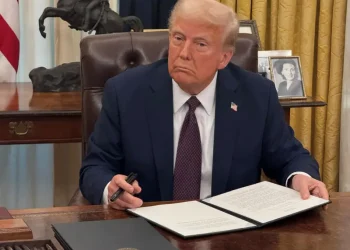
U.S. officials, including President Donald Trump and Secretary of State Marco Rubio, have argued that Washington’s actions are not an occupation but a targeted enforcement and pressure campaign focused on narcotics trafficking networks and foreign actors operating in Venezuela. The administration has paired arrests and seizures with an aggressive sanctions posture aimed at constraining oil revenues and forcing compliance.
The post-Maduro period has also been marked by a surge of misinformation online. The Associated Press reported that fabricated and manipulated images and videos circulated widely after Maduro’s capture, complicating public understanding of events and fueling competing narratives about the operation and its aftermath.
Inside Venezuela, Rodríguez is attempting to balance U.S. demands with the realities of governing a polarized country and managing factions still loyal to Maduro. A Reuters report citing a U.S. intelligence assessment indicated that key Maduro loyalists retained influence and that the transition remains vulnerable to internal obstruction.
Regionally, the crisis has sharpened divisions. Russia and China have condemned the U.S. action as unlawful, while some governments have offered cautious support for Washington’s stated objectives. The longer-term trajectory will likely depend on whether Rodríguez can maintain internal stability, secure cooperation from entrenched security actors, and negotiate a pathway that avoids renewed violence while meeting external pressure tied to oil, sanctions relief, and political reforms.