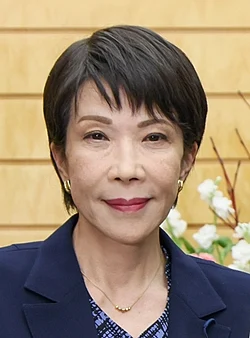
Japanese Prime Minister Sanae Takaichi has received a high-profile endorsement from U.S. President Donald Trump days before Japan’s snap general election, in a move likely to sharpen debate over foreign influence, security policy and Japan’s economic direction.
Trump praised Takaichi in a post on Truth Social, calling her a strong leader and signaling confidence in her stewardship as voters head to the polls on Sunday. Multiple outlets also reported that he invited her to the White House on March 19, underscoring Washington’s interest in continuity at the top of Japanese politics.
The endorsement is unusual in tone and timing. While U.S. presidents often work closely with Japanese leaders, explicit public support for a candidate in the closing stretch of an election is rare and risks being interpreted domestically as outside pressure.
Takaichi, who became prime minister in October, has positioned herself as a security-focused conservative prepared to deepen defense coordination with Washington while also expanding Japan’s own capabilities. Her office has framed that posture as pragmatic, pointing to a more volatile regional environment and a need for closer alignment with allies.
The backing comes as Tokyo and Washington continue implementing a major economic framework agreed last year. Under that arrangement, Japanese investment commitments in the United States were linked to lower U.S. tariffs on Japanese imports, including a reported 15% rate structure and a headline $550 billion investment pledge that remains politically sensitive in both countries.
For Takaichi’s supporters, Trump’s message reinforces her argument that she can maintain direct channels with the White House at a time of global trade friction. Critics, however, say the endorsement could complicate Tokyo’s balancing act with Beijing and feed concerns that Japanese policy is becoming too tightly bound to U.S. political cycles.
China has already been a central issue in the campaign, with Taiwan security and East China Sea tensions featuring heavily in party messaging. Analysts say a decisive win for Takaichi would likely mean policy continuity: firmer deterrence posture, expanded defense spending and deeper integration of supply-chain and technology strategy with U.S. partners.
With polling day imminent, the central question is whether voters view Trump’s intervention as validation of Japan’s current course—or as an unwelcome reminder of how exposed Tokyo remains to great-power politics. Either way, the endorsement has ensured that Japan’s election will be watched far beyond its borders.