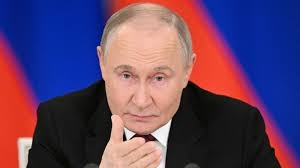
MOSCOW/BRUSSELS — Russian President Vladimir Putin said Russia remains ready to restore relations with European countries and return to what he called “normal, constructive communication,” framing any reset as contingent on respect for national interests and what he described as legitimate security concerns.
Putin made the remarks on January 15 during a Kremlin ceremony to receive letters of credence from newly appointed foreign ambassadors. In the same address, he said Russia was open to “mutually beneficial cooperation with all countries without any exceptions,” presenting the position as consistent with earlier Russian messaging rather than a policy pivot.
The comments arrive as parts of Europe cautiously revisit whether to reopen channels with Moscow nearly four years after Russia launched its full-scale invasion of Ukraine, a war that has driven sanctions, diplomatic isolation and a major reorientation of European security policy.
On January 16, Kremlin spokesman Dmitry Peskov publicly welcomed what he described as an emerging willingness in Italy, France and Germany to resume dialogue, calling it a “significant shift” and saying it aligned with Moscow’s view of how the situation should evolve. Peskov said Russia was in contact with the United States on Ukraine-related issues but had no comparable dialogue with European governments at present.
Reuters reported that Italian Prime Minister Giorgia Meloni has advocated renewed engagement, including the idea of appointing an envoy to negotiate directly with Putin, while French President Emmanuel Macron has argued Europe should be prepared for a broader dialogue framework if a durable peace does not emerge soon. The same reporting said German Chancellor Friedrich Merz has voiced hope that EU–Russia ties could eventually be rebalanced, while still supporting Ukraine.
Not all European capitals agree. Britain remains opposed to any diplomatic re-engagement absent clear evidence Russia is serious about peace talks. UK Foreign Minister Yvette Cooper said she has not seen evidence that Moscow “actually wants peace,” according to Reuters.
European officials and analysts have long debated whether selective engagement can reduce escalation risks, manage security concerns in areas such as arms control and energy, or support humanitarian initiatives — or whether it risks legitimising Russia’s battlefield gains and weakening the unity underpinning sanctions and military assistance for Kyiv.
Putin’s language—emphasising “mutual respect” and “security concerns”—is likely to be read in Europe through the lens of Russia’s stated demands on NATO and Ukraine, which many European governments reject. For now, the public split between those pressing for limited reopening of channels and those insisting on isolation signals that Europe’s debate over how to handle Moscow is intensifying rather than settling.