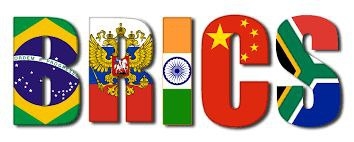
CAPE TOWN — A week-long naval exercise off South Africa’s Atlantic coast involving the navies of China, Russia and the United Arab Emirates — with Iran also linked to the operation in reporting — has reignited debate over whether BRICS is beginning to test a security role alongside its traditional economic agenda.
The drills, held January 9–16 under the banner “Exercise Will for Peace 2026,” were hosted from the naval base at Simon’s Town and adjacent waters near Cape Town. South African defence officials described the activity as routine cooperation focused on maritime safety and interoperability, saying it is designed to improve coordination to protect shipping routes and maritime trade.
Analysts, however, said the optics and timing are politically charged. The exercise brings together states that increasingly sit at odds with Washington, and it unfolds amid broader pressure on South Africa’s already strained relationship with the Trump administration. South Africa’s opposition Democratic Alliance has criticised the drills as compromising neutrality, while Pretoria argues it routinely trains with a wide range of partners, including Western navies.
The operation also reflected the expanded footprint of “BRICS Plus.” Reuters reported that Brazil, Egypt and Ethiopia attended as observers, while the exercise is framed as taking place under the wider BRICS Plus umbrella following the bloc’s recent enlargement. Analysts quoted by the South China Morning Post said the drill may represent an incremental effort to normalise BRICS-branded security cooperation without formalising the bloc as a military alliance.
A notable absence was India, a founding BRICS member. Al Jazeera reported that India and Brazil did not participate as deploying navies, reflecting sensitivities about being seen as aligning militarily with China or Russia and India’s preference for BRICS to remain anchored in development priorities. The SCMP similarly cited expert views that India already participates in other maritime security frameworks and may resist any drift toward defence-centric BRICS branding.
Experts stressed that joint drills among subsets of BRICS countries are not new. Examples include the IBSAMAR series (India–Brazil–South Africa), first held in 2008, often framed around search-and-rescue and maritime safety. The core question, analysts said, is whether “Will for Peace” signals a more sustained pattern of BRICS Plus cooperation where economic and security interests converge — such as protecting sea lanes and supply chains — while remaining short of an institutional security pact.