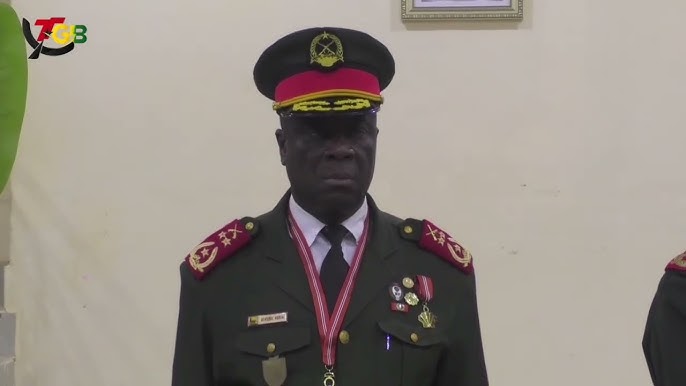
BISSAU, Guinea-Bissau — Guinea-Bissau’s military ruler, General Horta Inta-A (also widely referred to as Horta N’Tam), has promoted himself to major general, the highest rank in the country’s armed forces, through a decree he signed and published on Thursday, state and local media reported.
The decree elevates N’Tam from brigadier general to major general, upgrading him from two stars to four, in a move critics say underscores the junta’s efforts to consolidate power barely two months after soldiers seized control in the capital.
The promotion follows the November 2025 coup, when soldiers moved against President Umaro Sissoco Embaló just days after national elections that were already sliding into dispute. Both Embaló and opposition candidate Fernando Dias claimed victory even as official results were still pending, and the military suspended the electoral process while declaring “total control” of the country.
N’Tam, described by regional and international reporting as a close associate of the ousted president, was later installed as transitional president at the head of a military high command. The junta has said it intervened to prevent possible bloodshed between rival political camps, portraying the takeover as a security measure rather than a permanent rupture of constitutional order.
Under pressure from West African leaders and international partners, the military authorities have pledged a return to civilian rule and set Dec. 6, 2026 for new presidential and legislative elections, a date announced last week via decree. A separate transitional charter adopted in December established a 12-month transition and, according to Reuters, bars the interim president and prime minister from contesting the next elections—an attempt to reassure critics that the transition is not designed to entrench the coup leaders.
Guinea-Bissau—one of West Africa’s smallest states—has a long record of political instability, with repeated coups and attempted insurrections since independence in 1974. The country’s weak institutions, pervasive poverty and history as a trafficking corridor have repeatedly drawn international concern, including warnings over its exposure to corruption and transnational organised crime.
Whether Thursday’s self-promotion sparks wider internal dissent remains unclear. But the optics—an unelected leader awarding himself the military’s top rank—are likely to sharpen scrutiny as the junta seeks legitimacy ahead of the promised 2026 polls.