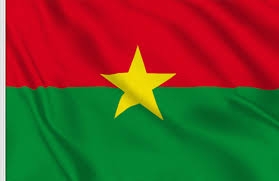
OUAGADOUGOU, — Burkina Faso has taken a key legal step that could smooth the way for its nascent civilian nuclear ambitions, after its transitional legislature approved accession to the Vienna Convention on Civil Liability for Nuclear Damage, a treaty that sets out rules for compensation if a nuclear incident causes harm.
Officials and analysts describe the move as part of the groundwork required for any country seeking to develop nuclear power, because liability frameworks help define who pays, how claims are handled, and the responsibilities of operators and states in the event of nuclear damage.
The decision comes as Ouagadougou deepens nuclear cooperation with Moscow. In June 2025, Burkina Faso and Russia signed an intergovernmental agreement on cooperation in the peaceful use of nuclear energy, a deal announced by Russia’s state nuclear corporation Rosatom during the St. Petersburg International Economic Forum.
For Burkina Faso’s ruling junta, the nuclear push is being framed as an energy-security play in a country where electricity access remains uneven and generation capacity is constrained. Supporters argue a reactor project—if it progresses beyond agreements into financing, regulation, and construction—could diversify the energy mix and reduce vulnerability to fuel price swings and supply disruptions.
But nuclear power development is a long, capital-intensive process, requiring an independent regulator, safety and security infrastructure, trained personnel, and emergency preparedness—areas where international legal instruments are often viewed as prerequisites for credibility with partners, insurers and lenders.
Russia has been expanding its nuclear diplomacy across the continent, positioning Rosatom as a major external partner for countries exploring nuclear energy and related technologies. Analysts say Rosatom has signed nuclear cooperation partnerships with at least 20 African countries, though many remain early-stage memoranda rather than full build projects.
Rosatom itself has publicly highlighted a broad footprint of engagement in Africa, spanning capacity-building, nuclear science applications, and long-term energy cooperation.
Burkina Faso’s accession to the Vienna Convention does not, by itself, mean a reactor is imminent. However, it signals intent to align with internationally recognised legal standards at a moment when the government is openly pursuing nuclear options with Russia—an alignment that could shape negotiations on financing, oversight, and public assurance as the project evolves.